The fullness of joy is to behold God in everything. –Julian of Norwich
Life is a paradoxical journey, embracing joy and sadness, light and darkness, birthing and dying, God in all and God within. This tension is held, sometimes with more trust than others. I find myself wondering in the tough times, is it really possible to still live with joy? Must I wait until “things get better” to feel the joy I long for?
In a previous post, I asked readers, what is joy? Specifically, I posed these questions: How do you define joy? What brings you the deepest joy? How do you cultivate joy? What is the source of joy? Is there a difference between childhood joy and grown-up joy? (Read the responses at The Source of All Our Joy!)
But recently I’ve been contemplating, can one feel joy even in the very tough times, during times of adversity, uncertainty, change, or emotional pain? Is it possible? And, if so, how does one DO this?
I know I have held both joy and sadness together. It is bittersweet. It is not the ego’s preferable way to experience joy; it feels like joy is being sabotaged. Of course, I want ALL joy. I know this desire is an extension of the either/or world that we live in. We prefer joy over sadness, not joy AND sadness. Despite my desires, I believe that life can be both/and, both joy and sadness. I believe (I have to believe) that we must learn to hold the two together.
But this I wonder: Is it possible when there is not something to feel joyful about to still live with joy? My faith tells me it is possible, but how? What do you think?
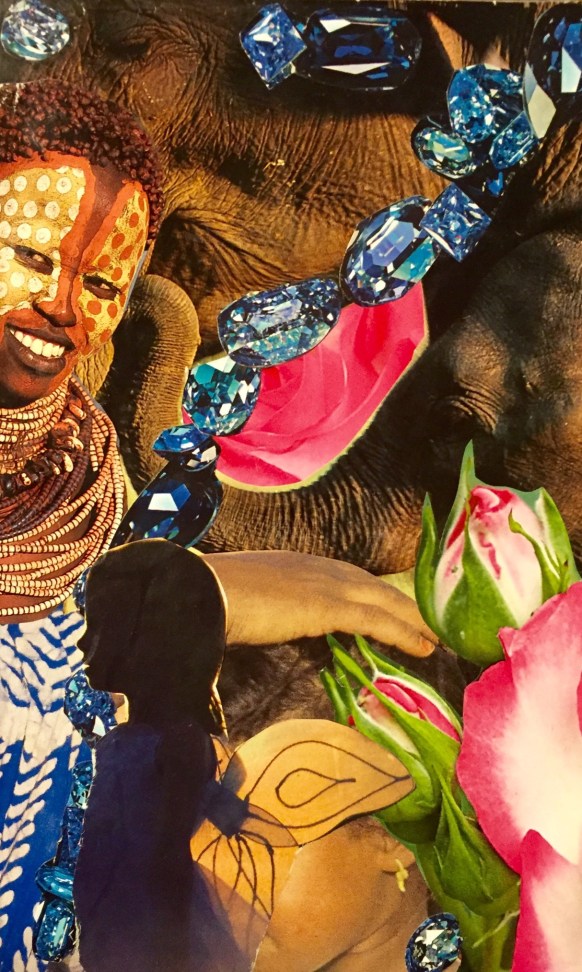
Card name: We all have a story
“There’s a ‘time to weep and a time to laugh; a time to mourn and a time to dance’ (Eccles. 3:4). But what I want to tell you is that these times are connected. Mourning and dancing are part of the same movement of grace. Somehow, in the midst of your tears, a gift of life is given. Somehow, in the midst of your mourning, the first steps of the dance take place. The cries that well up from your losses belong to the song of praise. Those who cannot grieve cannot be joyful. Those who have not been sad cannot be glad. Quite often, right in the midst of your crying, your smile comes through your tears. And while you are in mourning, you already are working on the choreography of your dance. Your tears of grief have softened your spirit and opened up the possibility to say ‘thanks.’ You can claim your unique journey as God’s way to mold your heart and bring you joy.” -Henri Nouwen
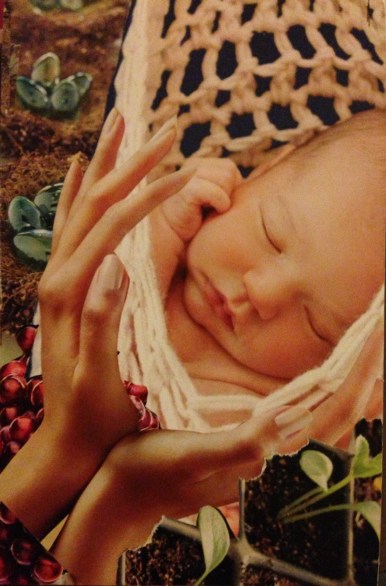
Using the SoulCollage® image above, consider what your story is. There is a story behind everything–what looks like joy, may quite possibly hold more painful memories than one might realize. How can we find joy in growing older? What does joy look like to you? Please share in the comments! Or create your own SoulCollage® card.
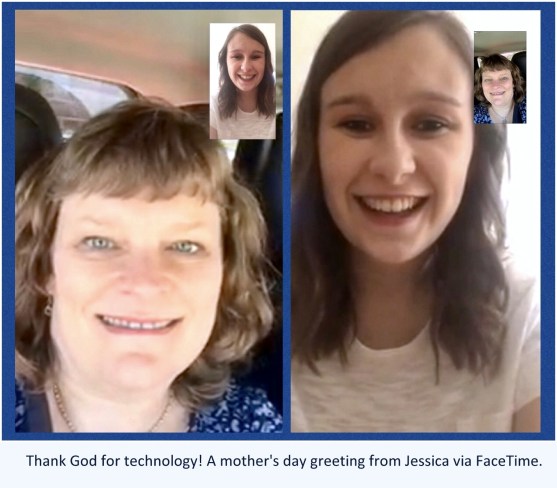
I heard the joyous greeting, “Happy Mother’s Day!”, many times this weekend. But I was thinking since it is the first of this holiday I have spent without my daughter, what makes a “happy” Mother’s Day?
Although I would love to be with Jessica, what makes a Mother’s Day truly happy (and this mother’s heart full on ordinary days as well), is having a happy child. This is all a mother desires—to know that her child is happy, learning, growing and always becoming.
A year ago, just one day before her college graduation, Jessica accepted a full-time research assistant position in Washington, DC. Just a few weeks later, in a car packed to the gills, she made the 1200-mile journey to move into a house with two roommates and begin her first full-time job.
In this past year, Jessica has done some serious adulting—working 40 hours a week, making decisions about her health insurance and retirement savings, learning on-the-job about social policy for low-income families, and challenging herself to grow personally and professionally. She’s had fun visiting new sites and cities, enjoying solitude, making new friends, and finding love. She’s made a few trips home for the holidays, made weekly phone calls to her grandparents and has hosted both of her parents as a guest in her home. She is becoming and it is beautiful to behold.
“Blessing Jessica, as my grown-up child, is a journey of becoming comfortable with the uncertainty and the many possibilities for her future, letting go slowly, surely, courageously. The blessing card is as much a reminder for me as it is for Jessica.” (from A Mother’s Blessing)
“When Jessica was just a toddler, I created a bedtime prayer that I blessed her with each night…Some nights, in a hurry, it was shortened to “God bless Jessica’s mind, body and spirit. Amen.” Still, it remains my prayer for Jessica as she continues to become, giving birth to herself over and over again, becoming more herself.
God bless Jessica’s mind so that she make good decisions and choices.
God bless Jessica’s body so that she grow strong and healthy and safe. God bless Jessica’s spirit so that she know the love of God and others. Amen.”
(from Jessica Becoming)
There isn’t anything that could make my Mother’s Day any happier than knowing that my prayers have been, and are being, answered. Jessica has made good decisions and choices, she is strong and healthy, she does know the love of God and others. And she continues to—she is becoming.
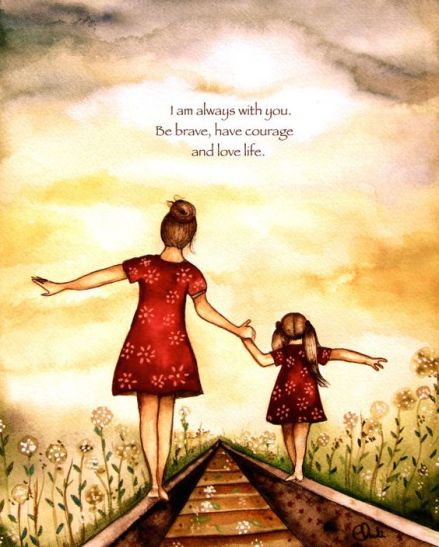
“I journey with Jessica in her becoming. As she grows, I grow; I re-center, reset and adjust to our new way of relating. I am learning and re-creating the role of mother as Jessica is becoming. We are both becoming.”
When your heart is full because your child is happy, then every day is Mother’s Day.
“However well satisfied you are with your own skill or intelligence,
never forget how much there is that remains unknown to you.”
-Imitation of Christ, Thomas à Kempis
There’s so much we don’t know, so much we don’t see, so much we can’t understand. There is a story behind everything and we aren’t always privy to it.
On a recent country drive, I stumbled upon a cemetery I had never seen before. It was an old cemetery surrounded by, likely, the original iron fence and arched gate.
I find the old gate breathtaking: the rust over the exquisite spirals and twists on the finials and posts; the contrast of brown and green grasses; the juxtaposition of birth and death, new and old, all at once. I wonder: How many people have passed through that gate? How many tears shed at the graves of loved ones? I wonder when flowers were last placed on a grave.
The gate remains locked now, and instead, a simpler entrance and a few graveled paths intersect to help visitors find their beloved. Only symbolic now, the fence and gate remain part of this sacred site and its story.
I continue my journey for miles down a country road with no houses, no people, and no other cars. Passing by a wooded area, I notice several old vehicles behind the limbs and brush, so easily missed that I turned around at the next intersection to drive by again. Taking a closer look from many angles and directions, I photographed the old truck. I wondered when it’s dying day had come and it was left to become part of the landscape. When had it last been driven to town? How many children had ridden in the back of the truck, wind blowing in their hair, or perhaps more recently, used it as a jungle gym? Continue reading “A Story Behind Everything”→
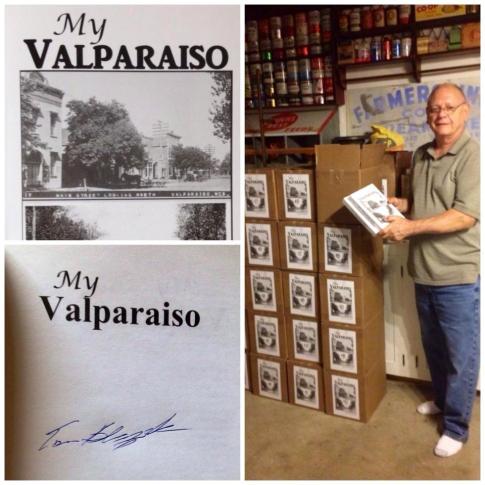
My dad, Tom Blazek, had a dream to write a book about his hometown, Valparaiso, Nebraska—to create a timeline of its history and to share stories of growing up in a small town. Passionate about history, he would devour a book on a topic he loved—about World War II, the Civil War, the history of Lincoln or Nebraska. He could find bits and pieces about Valparaiso from different sources, but he had a dream of gathering it all into one book, from the birth of the small village up to the present. His love of reading about history turned into a passion for sharing with others.
For some, his ambition to write a book came as quite a surprise. My dad wasn’t a
particularly motivated student, he is the first to admit. One classmate said he was the least likely of their class to ever write a book. As a teenager, any reason was a legitimate one for skipping school. One afternoon, hanging out at the town gas station with his friends, my grandma (God-rest-her-soul-for-raising-five-boys) discovered his truancy, went to the gas station, and strongly encouraged him to get back to school. Mrs. Jean Ang, my dad’s 7th and 8th-grade teacher, commented, “the Blazek boys, they had a lot of life.” God love his teachers and parents for tolerating his alternative form of education. As a teacher, it’s important for me to remember that everyone learns differently. Regardless of what he did or didn’t learn in school, he always worked hard.
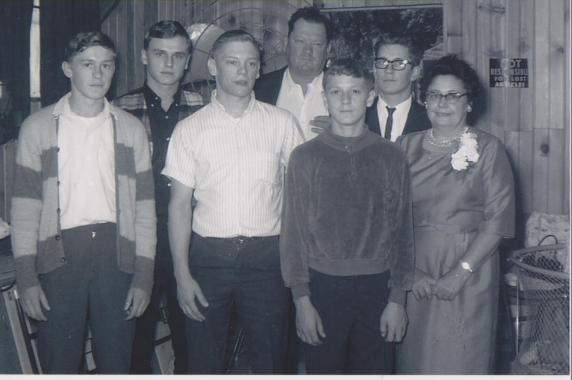
Grandma and Grandpa Blazek with the five boys that “had a lot of life” Jim, Tom, Don, Rick and Randy.
I’ve observed a work ethic in my dad that is unmatched. From delivering newspapers, farming and working at a gas station as a teenager; being a manager at Safeway grocery stores, working in dispatch, sales and management in the transportation industry; and, finally, in production and office management, my dad has ALWAYS worked hard, whether he liked his job or not. And for many years he supplemented his full-time job with hauling jobs—cleaning out attics and basements, taking trash to the landfill, and helping people move their belongings.
He had a good example of work ethic in his own grandfather, Frank Blazek, an immigrant from Czechoslovakia, who walked twenty-some miles to work on Sunday nights from Valparaiso to Gooch’s Mill in Lincoln, lived in a rented room all week, and, then walked home on Friday night to bring his paycheck home. And his own dad, Lod, worked wherever, whenever, doing whatever he could to make some money, even if the job took him a distance from home. Work wasn’t a choice. Work wasn’t about self-fulfillment or purpose or happiness. Work was a means to an end—it was food on the table.
So when my dad finally retired, he wasted no time getting to work on his dream (and if you know my dad, you understand there is no such thing as procrastinating or wasting time—he gets things done and works fast! And if there is a free moment, he washes his car.)
Each morning, rain or shine, for three years, he drove to downtown Lincoln, found a cheap place to park for four hours and walked to the Nebraska History Museum. While reading through archives, he took copious notes by hand. He read through every edition of the town newspaper, The Valparaiso Avalanche (1878-1887), followed by every edition of The Valparaiso Visitor (1887-1945), before diving into the Wahoo newspaper, the county seat, for anything about Valparaiso from 1945 on. Over 600 hours he spent at the Nebraska History and Saunders County Museums.
After gathering a morning’s worth of information, he went home to type up his findings, adding old family and town photos and local advertisements throughout the text. And when he had questions about what he read, he tracked down people he could talk to. He interviewed dozens of people who grew up in Valparaiso, often accompanied by his brother, Don. People loved to share their stories and some even offered up old photos and newspapers that weren’t available in the archives. My Uncle Don said, “I was amazed to hear people tell their stories when asked a question about the past. One question could ignite a person’s memory, some that probably had trouble remembering what they did last week, but, man, how they enjoyed reminiscing about their youth!”
Tom Blazek with his first shipment of “My Valparaiso”.
Stories are as important for those who hear them as the one doing the telling. Being listened to validates our experiences; we matter when we are heard. When we were kids, my brother and I would beg for stories about our dad’s growing up shenanigans, a window into his life before we were in it. His stories helped us see what life was like for him and helped connect us to the generations before us. But these stories are lost if not written down. Writing this book was part fact-finding and part storytelling, both his own and others.
My dad had a goal to have his book completed, printed and ready for distribution at the 2014 Valparaiso Heritage Days, an event that hundreds would attend. My dad was a town hero that day. Tom Blazek, the most unlikely person in town to write a book, had accomplished just that.
The skeptics who didn’t think he could do it or who didn’t think people would spend $25 on a book, were the same folks who couldn’t put the book down. (Pictured below on top-right is Mrs. Ang, his teacher—she still looks skeptical, doesn’t she?)
People, scattered throughout the American Legion Hall, were leafing through “My Valparaiso”, reading, laughing, reminiscing, and sharing their own stories. It was a special day of recognition for my dad, a goal accomplished, and a dream come true. The response was overwhelming—people bought not just one copy, but two, three or more autographed copies for gifts.
Top left: me and my dad. Top right: Mrs. Ang and my dad.
Over the next weeks and months, the reaction to the book was overwhelming. People loved it, ordering more copies, calling friends in distant states and telling them about it. From all over Nebraska and the country, people called and wrote to order a book or share their stories. My dad heard from people in every region of the United States, including Arizona, California, Oregon, Utah, Nevada, Colorado, North Dakota, Iowa, Illinois, Indiana, Connecticut, Massachusetts Pennsylvania, Virginia, Georgia, Texas, and Oklahoma.
Who knew that the small town of Valparaiso had scattered its townspeople so far? Who knew “My Valparaiso”, and my dad’s work, could have such a far-reaching impact?
The conversations that followed unearthed new stories and information; a second book was born. Some, like sweet old Edna Johnson, who enjoyed the first book so much, pre-ordered “My Valparaiso II” before it was even finished, but, sadly, didn’t live long enough to see it published. Another lady, in her eighties, said she read things about her family that she had never heard before.
Published in the Wahoo Newspaper
“My Valparaiso” and “My Valparaiso II” are chock full of events and anecdotes that warm the heart and keep the history of the town alive—everything from tornados, fires and blizzards; to the first automobile, electric lights, and pool halls; to horse and buggy accidents, train wrecks, burglaries and even suspected murder; difficult times during the Great Depression, illnesses like hog cholera and scarlet fever; and festivities including Fourth of July celebrations, the traveling circus, auctions and church gatherings. You’ll also find a list of every person from Valparaiso who served in World War II, every graduate from Valparaiso High School and every business ever established, along with photos and advertisements that span the years.
A topic of great concern for many years was alcohol—would the town be dry or not? In 1908, apparently “German and Bohemian immigrants brought with them the thirst for beer.” But Valparaiso was a dry town, off and on, for several years. The town newspaper reported in 1909, “If Valparaiso goes dry again next spring, the Visitor will be for sale. We, the editor, must simply have an occasional nip in order to ward off despondency and keep up a business appearance.” In 1912, fifty drunks were caught celebrating the 4th of July, and concerned wife, Lillie McMaster, took out an ad in the paper saying, “I hereby forbid any person or persons to give or sell my husband any kind of liquor. This applies to the saloon keepers of Valparaiso and Touhy.”
One of my favorite stories that my dad told, included in the first book, is the time he blew up his dad’s car. Yup, he blew up his dad’s car. My dad and a few of his friends had a plan to drive into Lincoln and “cruise through Kings on O Street”, a popular past-time in 1962. The first attempt, after some likely reckless driving, resulted in the “knocked-out rear end of the car.” They needed different transportation and my dad had a bright idea: “My folks, along with another couple, were in Lincoln… my brothers and I were told not to touch the car. Knowing my Dad always checked the speedometer, I unhooked it.” But then they needed gas. (You can see where this is heading.) Siphoning gas from one vehicle to another was the second bright idea: “We had a pretty big stream of gas running between the two cars when Richard Draper lit his cigarette and accidently dropped it causing the gas to go up in flames…and burning the whole back end of the car. Needless to say, when my folks got home I was in big trouble.”
My dad is a lively storyteller (he has pretty good material) and is an attentive listener. What a gift Tom Blazek gave to those he listened to and to the folks who learned something new about their relatives because of his books. What a gift it was to tell the stories that otherwise would have been lost and for the childhood memories that were stirred. What a legacy that will live on because of my dad’s dream and hard work!
And yes, there will be another book. My dad says, “I may not live long enough to do Book 3 but people keep sending me stuff.” He’s also been asked to write a book about Touhy, the town a few miles north of Valparaiso. He thinks he’ll have that one published in about a year.
This, among many other things, is what I’ve learned from my dad: Where we come from is important, but even more so is what we leave behind. “If you want to change the world, pick up your pen and write.”-Martin Luther
God can speak in so many ordinary ways, but, if one does not intentionally take notice, a lesson will surely be lost. For me, listening to my dreams and expressing myself creatively is when I am most aware of God’s presence.
Card Name: Birthing Something New
Recently, I had a dream that I was pregnant. I was not in labor but, clearly, I was expectantly waiting for the birth. When I woke, I knew this brief dream was one of both hope and uncertainty, and that it mirrored the ambiguous space I’ve been in for several months. I remember when I was in actual labor with my daughter, Jessica, thinking, “I quit. I’m done. I can’t do this anymore. I’m outta here!” It’s a silly thought, because, obviously, there is no other choice but to persist.
As any mother will tell you, labor is definitely worth it but, in the middle of it, that place of in-between, frustration and impatience can set in (not to mention, pain). As it is with birthing a baby, so it is with birthing something new in one’s life. One is more-than-ready to see the fruits of labor.
In dream language, being pregnant means more than giving birth to a baby; it’s about potential and expectation—giving birth to an idea, a new phase of life, or a new phase in a relationship. All of life is a birthing, dying and rebirthing process.
“…love in its fullest form is a series of deaths and rebirths. We let go of one phase, one aspect of love, and enter another… Pain is chased away and surfaces another time. To love means to embrace and at the same time to withstand many many endings, and many many beginnings—all in the same relationship.” –Clarissa Pinkola Estes, Women Who Run With the Wolves
I woke from this dream knowing that something new shall come and that I must persist. Less an act of will and more an act of surrender, I trust that this birthing is a divine experience.
Card Name: New Birth with an Empty Nest
Just a few weeks later, another dream gives me a hint of what is to come. I was frustrated that I hadn’t seen any progress on a house that was under construction. I wondered, how could the builder not show me this house that I was planning to buy? Finally, he gave me a tour. The rooms were larger, different than I had expected, surprisingly unique. There were some rooms that already had furniture in them, arranged in a way that I would never have considered. It was far more beautiful than I could have imagined. But there were other rooms that were still under construction. Also, there were two staircases—one that led to my bedroom and another that went to a few guest rooms, those that family might stay in. Although the rooms were near each other, they could not be reached from one to the other. They could only be reached through their separate staircases. In the large living room, there was a piano with rows of chairs gathered around it, as if for a performance. I was content that the house was coming along quite beautifully and far beyond my expectations.
This house is me. This dream spoke to me of comfort, fulfillment, wonder, patience, hope, and even, certainty. And although I am “under construction”, what is, and what is to come, is beautiful. Progress IS being made even if it might not look or feel like it. I am excited at the prospect that there are choices that I can make, of color and pattern, to complete the decor. What was revealed is certainty that God is working, and also a hope, a promise of something new to come.
I am surprised that I have my own staircase, that my room is separate from the others, but this gives me confidence that this journey is my own to grow in beauty of self and spirit. God is working on me and in me, giving me permission to limit distractions, to have my own haven of peace. It really doesn’t matter what God has in store for me because God dwells within me. I am at home wherever God dwells in my heart.
My dreams will continue to give insight and God will continue to work on me in a more beautiful way than I could have imagined myself. I may not know what is to come, but trusting the birthing process is surrendering the outcome.
I received the gift of the Holy Spirit when I was nine years old. It took many months of catechism class to prepare to receive the sacrament of Holy Confirmation in the Catholic Church. There were dozens of questions about doctrine and faith to study, like:
What is a sacrament? A sacrament is an outward sign made by Christ to give grace. What is grace? Grace is any gift from God. How many persons are there in God? There are three Persons in God.
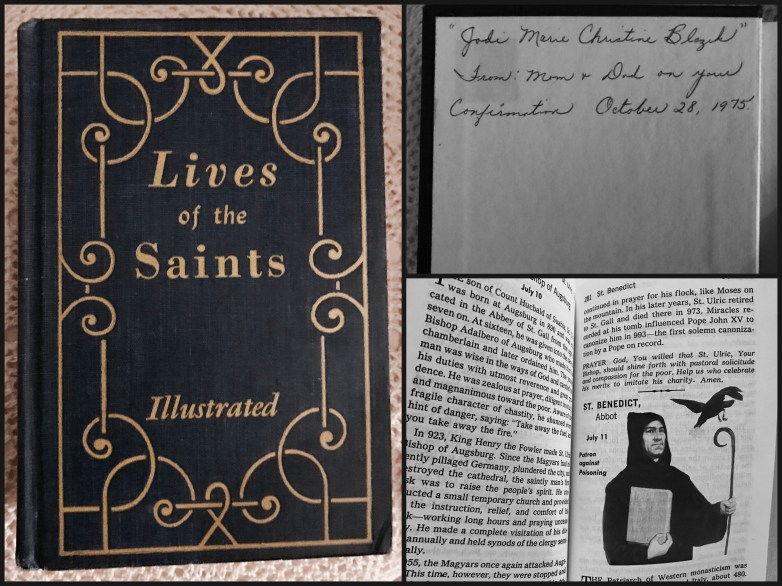
….and so on. There were scores of prayers and creeds to memorize, months of CCD every Wednesday afternoon and hours of quizzing by my parents at night, but the pay-off for a nine-year-old girl was the opportunity to choose a saint’s name as my second middle name. All by myself. This was a big deal. It seemed like such a grown-up thing to do, to pick MY OWN name. I chose the name Christine, not because I knew anything about St. Christine, but because the name was so pretty to me. Jodi Marie Christine.
My grandma was so proud of my Confirmation that she called me Christine the whole day. My parents gave me an illustrated book of the “Lives of the Saints” to commemorate the occasion and as any nine-year-old would do, the first thing I did was look up my birthday. I was immediately disappointed. The illustration seemed so dark –a man with a hood, a scary looking bird and a funny name that I had only associated with Benedict Arnold, a famous American traitor. After gaining such a beautiful name like Christine, what kind of luck did I have to get a guy named Benedict on my birthday?! July 11, St. Benedict, Abbot, it said. I read the pages about St. Benedict often, thinking that I should have some connection with this man as my patron saint, but then I forgot about him until…
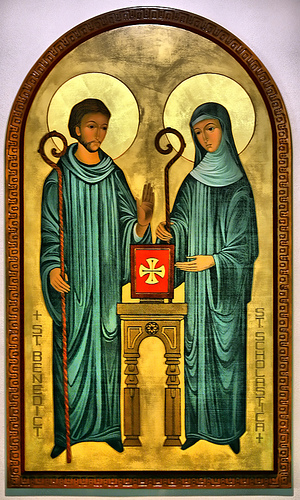
Fast forward 30 years when I found my way to St. Benedict Center, not because of the name or that I remembered anything that I had read about St. Benedict, but because I had a desire for prayer and silence. And at a silent retreat, I met a woman named Colleen who would become like a sister to me, an Anam Cara or soul friend. She gave me a card once that said, “We’re like sisters with different mothers.” We connected on a spiritual level–we prayed together, read spiritual books and could have talked for hours about our spiritual journey. And what I discovered the year she passed away further deepens our connection. Her birthday is February 10 and her patron saint is St. Benedict’s twin sister, St. Scholastica. They had a close relationship, even though they could not spend a lot of time together, and they were both committed to God.
Here is the story of St. Scholastica from the books of Dialogues by Saint Gregory the Great:
“Scholastica, the sister of Saint Benedict, had been consecrated to God from her earliest years. She was accustomed to visiting her brother once a year. He would come down to meet her at a place on the monastery property, not far outside the gate.
One day she came as usual and her saintly brother went with some of his disciples; they spent the whole day praising God and talking of sacred things. As night fell they had supper together.
Their spiritual conversation went on and the hour grew late. The holy nun said to her brother: “Please do not leave me tonight; let us go on until morning talking about the delights of the spiritual life.” “Sister,” he replied, “what are you saying? I simply cannot stay outside my cell.”
When she heard her brother refuse her request, the holy woman joined her hands on the table, laid her head on them and began to pray. As she raised her head from the table, there were such brilliant flashes of lightning, such great peals of thunder and such a heavy downpour of rain that neither Benedict nor his brethren could stir across the threshold of the place where they had been seated. Sadly he began to complain: “May God forgive you, sister. What have you done?” “Well,” she answered, “I asked you and you would not listen; so I asked my God and he did listen. So now go off, if you can, leave me and return to your monastery.”
Reluctant as he was to stay of his own will, he remained against his will. So it came about that they stayed awake the whole night, engrossed in their conversation about the spiritual life.
It is not surprising that she was more effective than he, since as John says, God is love, it was absolutely right that she could do more, as she loved more.
Three days later, Benedict was in his cell. Looking up to the sky, he saw his sister’s soul leave her body in the form of a dove, and fly up to the secret places of heaven. Rejoicing in her great glory, he thanked almighty God with hymns and words of praise. He then sent his brethren to bring her body to the monastery and lay it in the tomb he had prepared for himself.
Their minds had always been united in God; their bodies were to share a common grave.”
The lessons I’ve learned from St. Benedict and St. Scholastica, from my friendship with Colleen and other soul friends, are many. I’m sure there are more to come, but here is some of what I’ve learned so far:
Spiritual friendships never end. ♥ Neither death nor distance can separate us from the love of another. ♥ There is no such thing as loving too much. ♥ Spiritual friendships are a gift from God. ♥ We support each other in living out God’s purpose in our life. ♥ Spiritual connections with friends enrich one’s prayer life and guide the other back to God when one is temporarily lost. ♥ Spending time together is important, but friendship resides in the heart. ♥ We pray for and with each other. ♥ We cry with each other. ♥ We laugh together. ♥ We listen to, plan with, comfort and challenge each other. ♥ We are grateful for each other and we say it. ♥ “Our minds are united in God.”
I thank God for the example of all the saints and for learning about St. Benedict as a child. I thank God for my oblate experience to learn more about St. Benedict and his Rule (and about the hooded Abbot and his scary bird). I thank God for the lives and stories of St. Benedict and St. Scholastica. I thank God for spiritual friendships.
Joyce, Colleen and me at St. Benedict Center.
“Friendship is the linking of spirits. It is a spiritual act, not a social one. It is the finding of the remainder of the self. It is knowing a person before you even meet them.” ~Joan Chittister
Last week I enjoyed the stability of an icy day. The Benedictine vow of stability provides for our need to be rooted in Christ, to be grounded in the present moment, and practicing gratitude regardless of our circumstances and of the uncertain future. Seasons come and go, “but the word of our God stands forever.” (Isaiah 40:8) We learn from the seasons that they and all things do, indeed, pass. The icy, chilly weather prevents us from traveling too swiftly; there is something to learn from this staying put. This paradox, that we must stay grounded during the changing seasons, encourages us to move a little slower and to learn from the present moment. The icy weather gives us no choice but to stay put. Perhaps when we are going through “icy” relationships or experiences, we can apply the Benedictine principle of stability. Continue reading “An ICY snow day reflection”→
Today’s weather, on this day of the inauguration, reflects how I have felt for several weeks now. It’s a little dreary, foggy, rainy; the road ahead is unclear. But weather can change quickly in Nebraska, so I imagine that my feelings will likely change soon enough as well. There’s also a good chance that even if circumstances stay the same, how I see them will change. One day it won’t seem so foggy and dreary. I know this is true, both for the weather and for myself.
Earlier this week I posted photos of the ice storm that created such dangerous conditions, closing schools and businesses for a few days; today there is haze and drizzle; and, tomorrow it’s supposed to be 50 degrees. Only in the state of Nebraska can we experience so many seasons in one week! As for my state of mind, foggy actually feels pretty good compared to the earthquake, tsunami-sized feelings that came on the heels of a simultaneously frigid and fiery election season. But I know that how I felt November 8 is different than it was a month, a week, or even a few days ago. Continue reading “The road ahead is uncertain. But isn’t it always?”→
I submitted five photos of Christ the King Priory to a photography contest called Bridges, sponsored by Hildegard Center for the Arts, to highlight historic treasures in all 93 counties to celebrate the Sesquicentennial, or 150th birthday of Nebraska. Photographs were to focus on how the subject serves as a bridge to connect Nebraskan’s with their culture and heritage—a bridge from the past to the present.
I entered the following photographs of Christ the King Priory, the Benedictine monastery where my favorite monks live, to represent Colfax County.
If you know me, you’ve likely heard me mention my favorite monks and St. Benedict Center a few hundred times or two. Over the past 15 years, I have been to dozens of programs and retreats, attended Mass and Liturgy of the Hours (daily prayers said five times a day) whenever I could, received countless sessions of spiritual direction, led my own SoulFully You retreats and have become a Benedictine Oblate. St. Benedict Center has helped me make my way back to the Catholic faith after a 20-year hiatus and has become my spiritual home. The monks and Oblates are family to me.
Photo: Final Oblation Mass, St. Benedict Center Chapel
Photo: Jubilee Celebration, 50 years of Monastic Life for Fr. Volker Futter, pictured with oblates and monks of Christ the King Priory.
So let me tell you the story of Christ the King Priory and how they are bridging the past with the present:
In the early 1930’s, two monks, Brothers Felix and Egbert, were sent to the United States from Münsterschwarzach Abbey in Germany. The Abbey, following the Rule of St. Benedict (dating back to the 6th century), felt threatened by the Nazi government. They were afraid their financial ability to support themselves and their missions around the world would be in jeopardy. They were, in fact, justified in their fear: the Abbey was seized during World War II and used as a hospital for German soldiers injured in the war.
Meanwhile, the two monks traveled throughout the United States, humbly accepting donations that allowed their mission work to continue. Their primary focus was on keeping their missions alive, particularly in Africa. If there was no income flow through donations, they could not continue their work, a vital component of the Benedictine motto, Ora et Labora (prayer and work).
By 1935, the monks found their permanent home in Schuyler, Nebraska. The Benedictine Mission House, as they were named, had its first location in the former Notre Dame Sisters Convent, an old house in town. By 1979, several more monks joined the monastic community and a new home was built into “Mission Hill”, just north of Schuyler, and named Christ the King Priory. Their new home was uniquely designed burrowed into a hill, symbolically representing their vow of stability. The building, visible only on one side with a chapel steeple rising out of the center of the hill, appears like an earth lodge or a teepee as if to say, “We are here to stay. You have supported us and we shall now support you. We honor your native past and we want to be part of your present and future.”
The monks, while continuing to fundraise for missions around the world, became servants of Schuyler by building a retreat and conference center in 1997. St. Benedict Center, built on 160 acres of farmland across from Christ the King Priory, provides an oasis of peace for those who search for personal and spiritual growth. They welcome individuals and groups of all Christian denominations as they seek God in a peaceful and quiet setting for prayer, rest, and renewal; a special place to escape the noisy world and to be alone with God.
Another vow the Benedictine monks take is obedience, to listen carefully to what God is saying and to be present to community needs. As the population of Schuyler changed through the years with an increase in Hispanic immigration, this careful listening led the monks to provide legal immigration services and support through El Puente, in a joint partnership with Catholic Charities of Omaha.
From 1930 to 2016, from Germany to Schuyler, from a small house in town to a monastery on the hill, the monks of Christ the King Priory bridge the past to the present. The German monks who came only to secure financial help for their worldwide missions are now serving immigrants and visitors from all around the world in the community of Schuyler, Nebraska through their missions of St. Benedict Center and El Puente.
Photo: Münsterschwarzach Abbey, Germany
Münsterschwarzach Abbey, the mother house in Germany where Brother Felix and Egbert came from, eventually returned to its monastic roots after the war and celebrated 1200 years of prayer and work last summer.
You can see all of the winners, a virtual photo exhibit, a digital catalog of all photos, lesson plans and more at the Hildegard Center for the Arts website. The traveling exhibit schedule is:
The Great Plains Art Museum in Lincoln: January 6 – March 25, 2017 The Seward Civic Center: June 1 – July 28, 2017 The North Platte Prairie Arts Center: August 1 – September 22, 2017 The Norfolk Art Center: September 7 – October 26, 2017 The Alliance Carnegie Arts Center: September 26 – November 10, 2017 The Durham Museum in Omaha: November 14, 2017 – January 7, 2018
For more information about Benedictine spirituality, a new blog/website,BeingBenedictine.com.
For more information about Benedictine spirituality Fr. Mauritius Wilde, former Prior of Christ the King Priory, addresses many topics on Discerning Hearts podcasts and Wilde Monk blog posts.
For more information about SoulFully You retreats and other blog posts.
Happy New Year from SoulFully You! Thank you for subscribing to and sharing my posts during 2016.
The SoulFully You website was birthed as a way to connect with those who practice prayerful creativity and who attend my retreats and workshops. The blog came along later when writing as an expression of creativity felt comfortable. Journaling is a spiritual practice, sometimes an emotional purging, but always a way to see the hand of God at work in one’s life. For me, reflecting is just as prayerful as the writing itself. Reading what I have written during 2016, I see how God was preparing me for challenges, urging me to trust and to be patient. God works in every moment of our life—in times of joy and peace, turmoil and trial. I am never more certain of that than when I re-read my journal or blog posts. I appreciate those in person, or through this blog, who joined me in the journey.
Lessons I Have Learned, Again
Most of 2016 was observed as a Jubilee Year of Mercy in the Catholic Church, a time to reflect on the many ways we are in need of mercy and the opportunity to always begin again. Sometimes it takes living, learning a lesson, living it again, remembering the lesson learned, (and in my case) writing about it, screwing it up a few more times, before, finally, letting the lesson settle into the soul as a balm for what ails.
There were plenty of opportunities to practice mercy, on myself and others, this year. In Parker Palmer for President: The only political post I will ever make, I was full of intention to be “more Benedictine” during the tension of a tumultuous election year—to listen more, to honor diversity and to be more hospitable to those who don’t share similar political views. I admit that it was easier to write before we knew who the Presidential nominees would be, before offensive Facebook posts and family disagreements, before the dream of our first woman President died, than it was to live out. The best outcome from this post—a direct response from the dear Parker Palmer, who I pledge to vote for should he ever decide to run.
Lesson learned: Having intention is easier than action; be more merciful to oneself; try again.
In When the Dust Settles, I had a dream that gave me the insight to move through some difficult situations slowly, to be cautious, and to patiently wait for the dust to settle, to see what otherwise might be overlooked. God has many backup plans for us; we don’t need to have a perfect vision of what is to come. By surrendering to surprise, by surrendering an idealized version of our life, we create an opening for God to work in mysterious and more perfect ways than we could have imagined.
Lesson learned:Be patient; one can see more clearly when the dust has settled.
I also learned what I previously thought I knew, that I don’t know nothin’. I learned from my father-in-law, who also knew nothin’, that one should leave “room for not knowing, for mystery. He knew he wasn’t in charge of all things true… and he admitted it many, many times.” So many times I’ve thought I had things figured out, knew what would happen, had expected an outcome, just to come back to this lesson—I don’t know nothin’. Anything can happen and that’s going to be okay too. Things change, God is constant.
Lesson learned: I don’t know nothin’.
I also remembered that I am a child of God, something I thought I already knew, but apparently had forgotten also. In Made for Goodness: A Child of God, I was reminded of this message: “Walk slowly. Listen, for God is speaking. You are accompanied. You are known; uniquely created. Be faithful. Trust and it won’t matter how the road may turn. It’s not where you are going, but how. God is with you.”
Lesson learned: God is constant. HE is before all things. By HIM all things consist. (Col 1:17)
So Much Joy Too
Despite the challenging year, there was so much joy too. Most significantly, our daughter, Jessica, navigated her final semester of college, landed an amazing job in Washington DC and moved to Capitol Hill two weeks after receiving her Bachelor of Arts in Political Science and Business Administration. “Our blessing has always been for her to pursue her dreams, to find her place in the world and to become a joy-filled, independent adult.” See A Mother’s Blessing and Just Listen: Advice for a Quarter-Life Crisis.
Much joy came from simple, yet poignant moments: lunch with a friend, a walk around Holmes Lake, a thoughtful text message or a surprise gift or card of encouragement, good conversation, times of silence, reading, creating, leading or attending a retreat at St. Benedict Center, having a photo in the Hildegard Center for the Arts “Bridges” Nebraska Sesquicentennial Photo Exhibit, Oblate discussions and lectio divina, the friendship and shared reading with my Circle and book group, the satisfaction of finishing my first theology class at Creighton University, the ordinary moments of marriage and mothering, a Carrie Newcomer concert on a coincidental weekend trip to DC, moments of clarity and connection with the Divine. Joy can always be found.
In 2017, I hope to write more about Benedictine spirituality, sharing posts and other resources at a new website and blog, BeingBenedictine.com
Thanks to you, SoulFully You was viewed 4700 times by over 2400 readers in more than 40 countries, primarily in the United States, Canada, United Kingdom, Australia and Germany. SoulFully You is about listening, praying and living a creative, purposeful, passionate life. It’s about becoming SoulFully You.
May you have joy, peace, love, and creativity in 2017! May it settle in your heart that you can “do this hard thing” knowing God is present in all of your moments. Blessings, Jodi
You can do this hard thing You can do this hard thing It’s not easy I know But I believe that it’s so You can do this hard thing






 raised her head from the table, there were such brilliant flashes of lightning, such great peals of thunder and such a heavy downpour of rain that neither Benedict nor his brethren could stir across the threshold of the place where they had been seated. Sadly he began to complain: “May God forgive you, sister. What have you done?” “Well,” she answered, “I asked you and you would not listen; so I asked my God and he did listen. So now go off, if you can, leave me and return to your monastery.”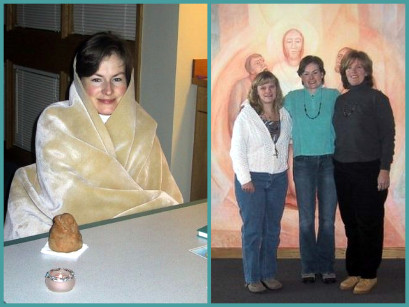


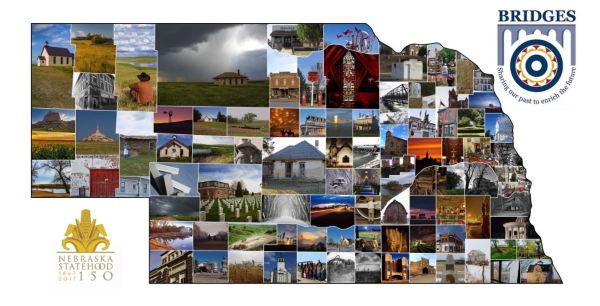


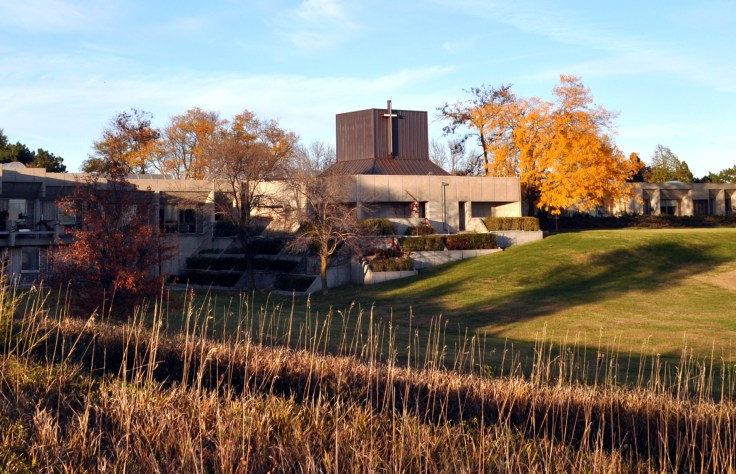

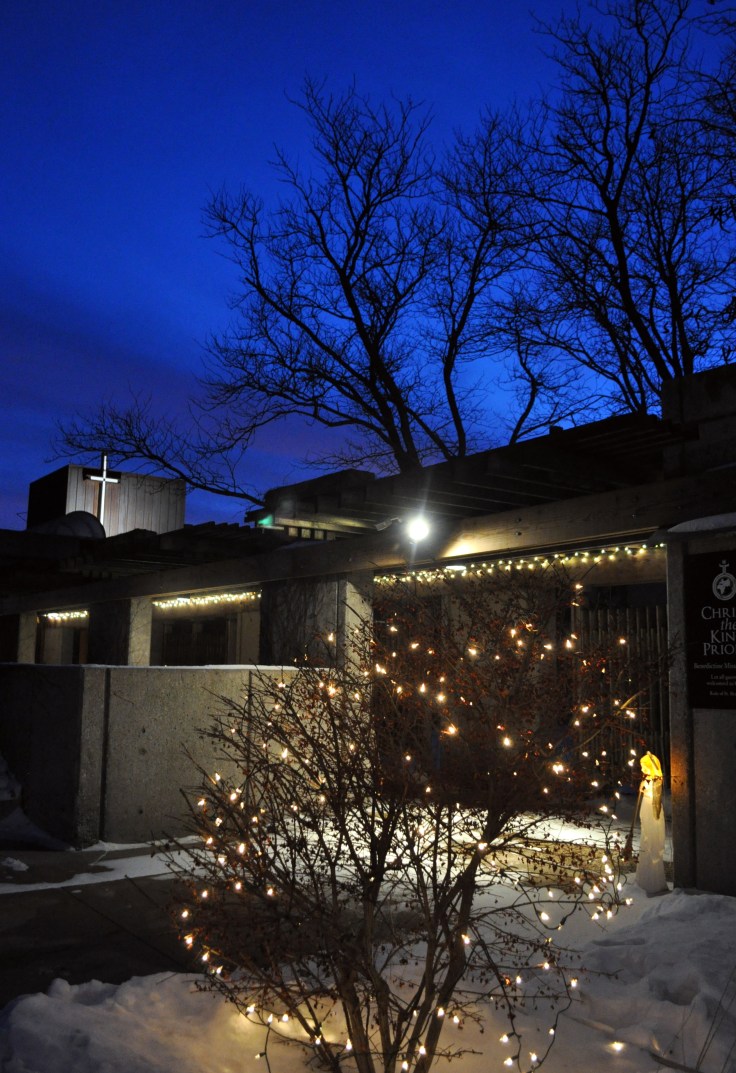
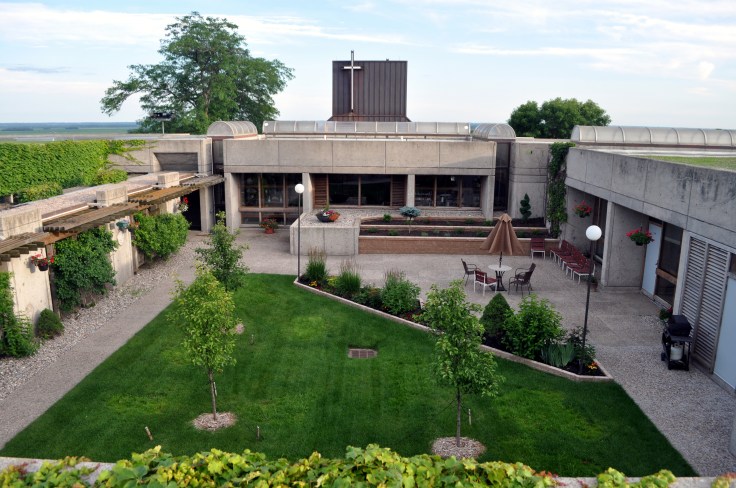
 Photo: Final Oblation Mass, St. Benedict Center Chapel
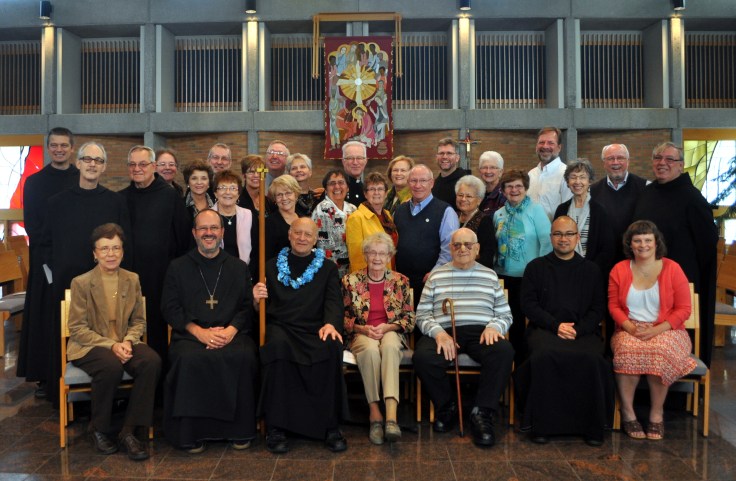 Photo: Jubilee Celebration, 50 years of Monastic Life for Fr. Volker Futter, pictured with oblates and monks of Christ the King Priory.
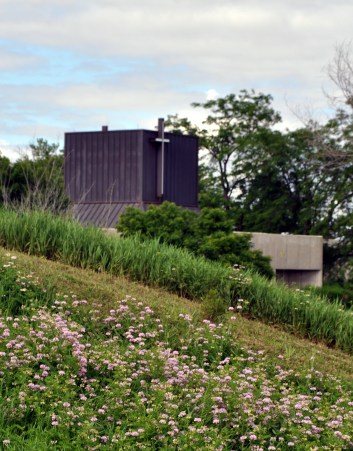
 Photo: Münsterschwarzach Abbey, Germany

 Happy New Year from SoulFully You! Thank you for subscribing to and sharing my posts during 2016.
 There were plenty of opportunities to practice mercy, on myself and others, this year. In


 SoulFully You