It is so important to cultivate sacred friendships, to make space for people to experience giving and receiving the unconditional love that God extends to us.
Soul friends, or anam caras, can bring us joy, humor, understanding, compassionate listening, comfort, or consolation—and the intuition to know what we need sanctuary from. For nearly 17 years, I have met with a circle of friends to read and discuss spiritual books. We have gone through several iterations as members have, sadly, passed away, moved away or moved on, but we provide sanctuary for each other that I am grateful I can count on.
In Session 1, we contemplated the lyrics of Sanctuary, written by Carrie Newcomer, and explored the power of images to tap into our intuition through collage. Expressing one’s creativity allows time and space for new ideas to bubble up, for questions to surface, and for meaning to take hold.
“Images attract the attention of the right side of our brains, and when there are only images, this intuitive side stays in charge and will go deeper into the uncharted territory of the psyche. It is this side of our brain that can see the whole picture at once and surprise us with wise answers that seem to come from some deeper place.” Seena Frost, SoulCollage Evolving
My Sanctuary Card
Contemplative Session 2: Sanctuary in Thin Places
The Caim Symbols, as with images, can represent something beyond a surface level of understanding, pointing to the abstract. Symbols can become an important part of rituals, helping cement an idea or intention and give energy to creativity and prayer.
While researching sanctuary as a theme for this retreat, I discovered two symbols that illuminated the notion of creating sanctuary. The first is the Celtic Christian symbol, caim. A caim can be practiced as a ritual of circling oneself with prayerful protection in dark times. There is a power in a symbol that embraces its meaning and yet goes beyond—it can be a reminder of being loved and safe during times when one feels uncertainty.
“The “caim” involves simply drawing a circle around yourself or another person physically or in your imagination. This encircling prayer is grounded in our awareness of the constant companionship and protection of the divine. It reminds us that God is in this place. Often, as they embarked on journeys or felt at risk, Celtic pilgrims would inscribe a circle around themselves as a reminder of God’s ever-present companionship and protection.
Practicing the encircling prayer is simple. Pause and then take a moment to draw a holy circle around yourself or, imaginatively, around a loved one. Use your index finger as a way of inscribing the circle around you. As you draw the protective circle, you may use a traditional or contemporary prayer of encircling. You may also choose to write and read your own personal prayer for yourself or another. But, in any case, the power of a spiritual tradition often finds its most lively expression when we embody it from our deepest spirit and in the language of our own hearts.”
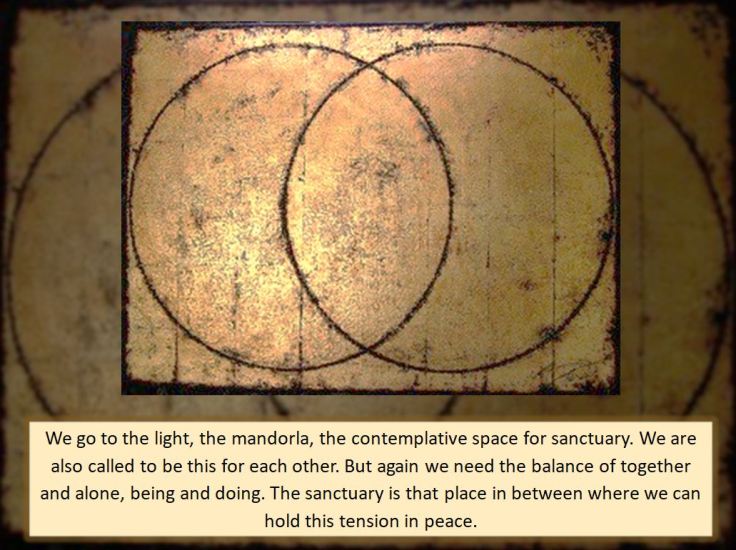
The Mandorla It was serendipity that brought me to the next symbol and image—the mandorla. During a retreat on the St. John’s Bible, an acquaintance shared with me how important the mandorla was to her spirituality. Thinking she was mispronouncing mandala, she shared with me that the mandorla is an ancient sacred symbol used in icons. The union of the circles, an almond shape, create the mandorla. Italian for “almond”, also known as a vesica piscism, it is a symbol of new life and fertility. It is often used in Christian art to frame Jesus or Mary.
Within days I came across a few other references of mandorlas used in icons—and then came the inevitable falling-down-the-rabbit-hole-of-the-internet-research. I had no idea how often the mandorla was used in art and how deeply archetypal the meaning is. In Christian art, mandorlas represent sacred moments that transcend time and space, such as the Resurrection and Transfiguration of Jesus and the Dormition of the Theotokos and symbolize the Christ Light. The two circles can symbolize the balance between seeming opposites—body and soul, physical and spiritual, masculine and feminine, light and dark, togetherness and solitude.
We go to the light, the mandorla, as a contemplative space for sanctuary. The mandorla is that in-between space, that “thin place” where we can carve out time to be in the presence of God, a place of sanctuary where we can rest in the tension of opposites. We are called to be this Christ Light for each other, but it is the balancing of together and alone, being and doing that we desire.
Read and Reflect
“If there is anything the stories of Advent and Christmas want to impress upon us, it’s that heaven and earth are in conversation. These weeks invite us to eavesdrop. We listen in as angels appear to people in their dreaming, their working, and in other corners of their ordinary lives. We travel with wise ones who watch the heavens and follow a star. We hear sacred texts that tell us of a God who takes flesh and enters into our human existence. Again and again we see points of passage between the realms, giving us cause to wonder if the wall between the worlds is weaker than it often seems.
Celtic folk have long called such points of passage thin places. In the physical landscape and in the turning of the year, there are spaces where the veil between worlds becomes permeable. Heaven and earth meet there; past and future intertwine with the present, or fall away entirely.
In Christianity and other traditions, specific locations have been recognized as thin places. These sites often become destinations for pilgrimage, with the presence and prayers of visitors across the centuries seeming to make the veil thinner still. Yet the meeting of worlds is not purely location-dependent; thin places happen where they will. Sometimes called thin moments, they can occur in any spot that inspires us to open our eyes, our ears, our hearts to the presence of God, who imbues creation and goes with us always.
My friend Brenda says, Part of what makes life hard is that it’s mostly thick places. One of the wonders of thin places is that they have the ability to occur in those thick places, those riddled-with-life spaces, those moments or seasons made of muck and struggle. Think again of the stories that come to us at this time of year; they are nothing if not earthy. For all their seemingly supernatural elements, they are rich in the stuff of real life: pregnancy, loss, travel, pasture, manger, creatures, birth.
At the heart of the conversation that unfolds during Advent and Christmas is this: when heaven and earth meet, they meet in our midst. The Incarnation does not happen at a remove; it happens among us, inescapably intertwined with all this world holds. What does this mean for us here and now, in this world, in this time? How do we welcome the God so willing to come to us?
Source: Jan Richardson (Jan offers a free Women’s Christmas Retreat every year at Sanctuary of Women. I lost track with all of my research where I found this article she wrote and some of the questions below, but I’m sure it is from one of her retreats. She writes amazing poetry and has the most beautiful art.)
Consider journaling with the following questions or making a collage card using these questions as a guide.
How can we find sanctuary in the thick places, in everyday life?
When have you sensed heaven and earth at play together, a thin place that opened up to you? What did you find there? What did you take with you when you left?
Is there some part of your life that feels like a particularly thick place — an aspect that feels especially complicated or mundane, or seemingly resistant to the presence of God? What do you need there? How might it be for you to simply sit with that space and ask God to meet you in the midst of it?
What does this mean for us here and now, in this world, in this time? How do we welcome the God so willing to come to us?
Creative Practice Consider the symbols, images, and questions in Session 2. Journal, create a collage, write a caim prayer, contemplate, visualize the mandorla as the light of Christ that brings balance to all of life.
Listen to “Behold, All Things Are New” by Alana Levandoski.
Share your insights or creations in the comments. Session 3 coming soon. Blessings, Jodi
Sprigs of Rosemary—A SoulFully You Online Advent Retreat
Over the next several days, I will share excerpts from a recent Advent retreat I was honored to lead. Ten women joined me on a journey to explore the significance of seeking, being and finding sanctuary.
The inspiration for the retreat came from the lyrics of this song, Sanctuary by Carrie Newcomer.
Sanctuary was written by Carrie Newcomer after a conversation with her friend Parker J. Palmer. She asked him, “What can we do when we are personally or politically heartbroken?” He responded that we take sanctuary. We gather with those we love. We remember, we share stories or we sit in silence until we can go on. There is time for positive action, to do what needs to be done, but there are also times when we rest in the arms of what most sustains us.
The retreat, Sprigs of Rosemary, was an opportunity to creatively and prayerfully ponder what sustains us—a special time to gather with kindred spirits and create our own sanctuary. Consider asking a circle of friends to join you for this online contemplative retreat…or if that doesn’t work, simply carve out time for yourself, a little each day, to practice Lectio Divina with song lyrics, poetry or scripture and to express yourself creatively through SoulCollage®.
Contemplative Session 1: Listen to Sanctuary by Carrie Newcomer.
Practice Lectio Divina with the lyrics of this song. What words or phrases speak to your heart? Do any of these words or phrases resonate with you?
Refuge (safe, rest, quiet) — Haven in the storm — Fire (all but gone, embers warm) — Sprigs of Rosemary (remember) — Sanctuary — Carry on — Knees (ground, dropped me) — Us and them — Circle of friends
Consider what SANCTUARY means to you.
What do you think is the significance of SPRIGS OF ROSEMARY? Consider some of the historical uses of rosemary.
Create a question or two to guide you during this online retreat. As you consider words that touched your heart, contemplate the following questions.
Create a SoulCollage® card with images that speak to SANCTUARY or other words that resonate with you and/or questions that you would like to explore more deeply.
Collage is a creative and intuitive act of cutting and pasting images. A collage is easy to create and, yet, so powerful. Images can guide you to a new awareness and reveal a deeper level of thought and feeling. Gather magazine images that you gravitate to. Cut the images out of their original context and imaginatively place them in a new context. It can often feel that an image selects you. Play with different backgrounds. Let your intuition speak to you. When you have enough images, start to frame or fit them together, arranging the images into a collage. SoulCollage® cards are 5 x 8, but use what feels comfortable for you. When it feels finished, glue your images down. If you have never tried creating a collage, you will be amazed at what you can learn from this process. More on that later.
A collage of SoulCollage cards I have made through the years. There is no right or wrong when creating. Just let your intuition be your guide. Let your heart speak through images.
May your contemplation of song and lyric be a rich experience. Feel free to ask questions and/or share your insights in the comment posts below.
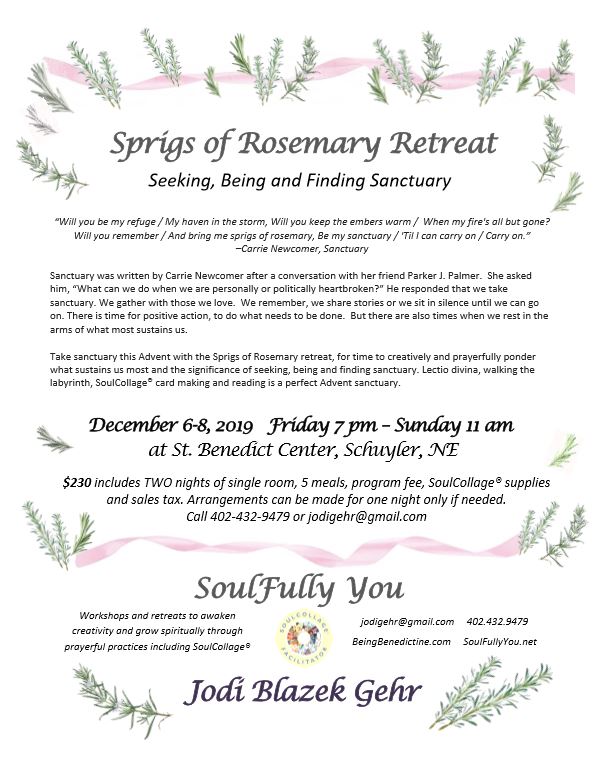
December 6-8, 2019: Sprigs of Rosemary Retreat at St. Benedict Center, Schuyler, NE.
“Will you be my refuge / My haven in the storm, Will you keep the embers warm / When my fire’s all but gone? Will you remember / And bring me sprigs of rosemary, Be my sanctuary / ‘Til I can carry on / Carry on.”–Carrie Newcomer, Sanctuary
Sanctuary was written by Carrie Newcomer after a conversation with her friend Parker J. Palmer. She asked him, “What can we do when we are personally or politically heartbroken?” He responded that we take sanctuary. We gather with those we love. We remember, we share stories or we sit in silence until we can go on. There is time for positive action, to do what needs to be done. But there are also times when we rest in the arms of what most sustains us.
Take sanctuary this Advent with the Sprigs of Rosemary retreat, for time to creatively and prayerfully ponder what sustains us most and the significance of seeking, being and finding sanctuary. Lectio divina, walking the labyrinth, SoulCollage® card making and reading is a perfect Advent sanctuary.
To sign up for the retreat, send email to jodigehr@gmail.com.
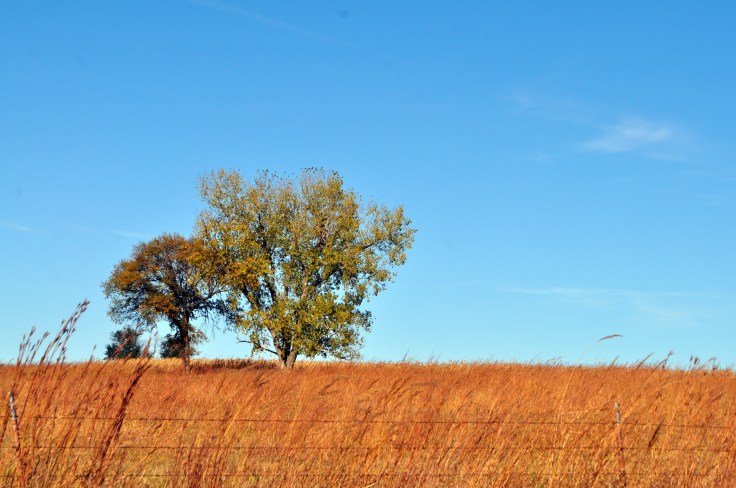
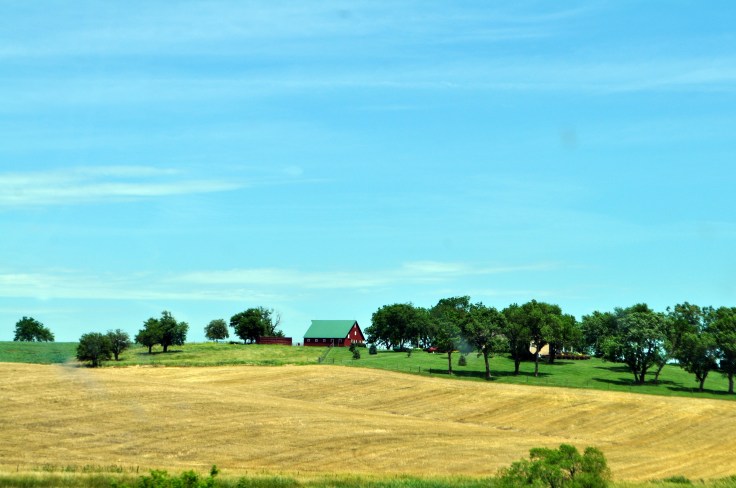
Profoundly impacted by the lyrics and vocals of “Benediction of the Trees”, written and performed by Derek Dibbern, I share his music and also images of trees I’ve taken through the years in different seasons and from various states and countries.
Derek and I met at St. Benedict Center several years ago and our paths continue to cross–we’ve been in the same space for Zen meditation, Catholic Mass, my school classroom, as well as local bars and coffee shops where he has performed. Deeply spiritual and always seeking, Derek is a student of inspirational and recreational tree climbing at Tree Climbing Planet in Oregon. He dedicates the song to his teacher, Tim Kovar, and “the many woodland creatures that have held us aloft in our arboreal adventures.”
This song is a prayer. It is recognition that Nature blesses us with trees for our healing, enjoyment, leisure, and protection. Our very breath is dependent on the Benediction of the Trees.
Benediction of the Trees
From the Heart to the Heavens
Rooted in the Earth
Branching out above us
Healing what was hurt
Reaching down to lift us
Swing us in the breeze
the air we breathe She gives us
Benediction of the Trees
Home before our houses
Cornered us inside
Gentle arms around us
Above the rising tide
Can you hear them calling?
Like music in a dream
The leaves are always falling
A Benediction from the Trees
A shout becomes a whisper
A Sermon into Song
It’s useless to resist her
She’s where we all belong
In our Sanctuary Forest
Beneath the Pleiades
Cicadas in the chorus
Benediction to the Trees
As the moon reflects the sunlight
From a million miles away
I’ll try to get the words right
So you can hear her say
In a melody familiar
That brings us to our knees
In Liturgy peculiar
Benediction to the Trees
“…the doors to the world of Wild Woman are few but precious. If you have a deep scar, that is a door, if you have an old, old story, that is a door. If you love the sky and the water so much you almost cannot bear it, that is a door. If you yearn for a deeper life a full life, a sane life, that is a door.” –Clarissa Pinkola Estes, Women Who Run With the Wolves
I am one who is Witness to self.
I am one who stands tall
Upright, resilient, longsuffering
Despite winds of change.
I am one who, with the pace of a praying monk,
Glides gently through breeze and shadow, clouds and sea.
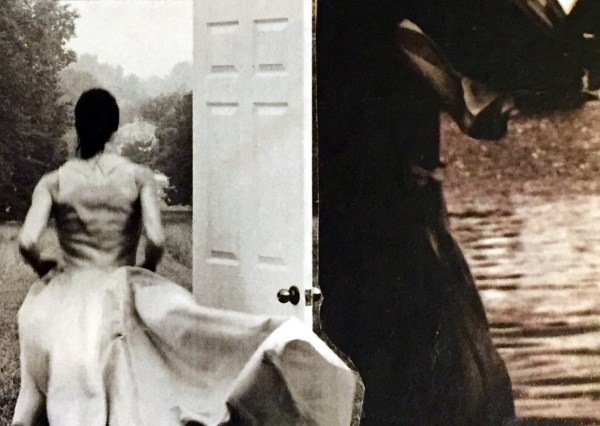
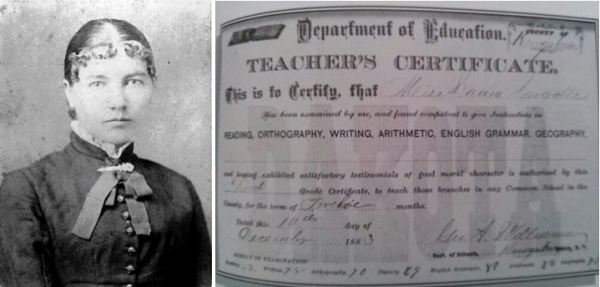
In honor of Laura Ingalls Wilder’s birthday February 7, 1867, I share a previous post, “Why I Teach.”
Childhood Dreams
As early as kindergarten, I identified teacher as a potential
occupation in my “School Years” book, a collection of elementary school memories. My kindergarten-self chose nurse, teacher, model and mother as possible career and life choices, although the options were limited to traditional girl-jobs only. (I’ve wondered why I didn’t dare to select baseball player or astronaut. Was it because those jobs did not interest me or did I not consider the boy-jobs? Or why were airline hostess and secretary NOT of interest to me?) Female stereotypes aside, by fourth grade, I had wisely eliminated model and nurse (yuk and yuk!!), leaving teacher and mother.
I was interested in learning and teaching as soon as I was old enough to work my way through phonics, spelling and math workbooks, just for fun. And then creating worksheets and math problems, grading spelling quizzes and making lesson plans became my childhood joys. My brother was my first student and I worked him pretty hard. I remember taking the graded assignments I’d given him to my fourth-grade teacher, proudly showing her what I was helping him accomplish outside of school hours. Rather than receiving the anticipated (and sought-after) praise, she promptly told me I should back off and not force him to be my student anymore or he might hate school—my first humbling opportunity at professional self-reflection.
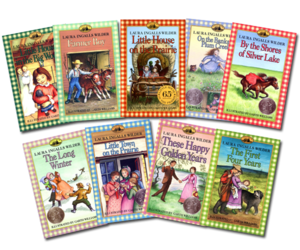
Laura Ingalls Wilder was my childhood heroine. Pioneer girl turned teacher; wide-open prairie sky and her own classroom, from Little House on the Prairie to These Happy Golden Years —I wanted to BE Laura. I admired her sense of self-confidence and independence, how she encouraged students to overcome learning challenges, many not much younger than she. (I am such a huge fan of Laura Ingalls Wilder that when my daughter could barely read I bought the entire book series, picture books and television movies for her and also road-tripped to Mansfield, Missouri to see the house where Laura penned all of the Little House books. Quite a thrill!)
All the evidence indicates that, if I wasn’t born with the desire to teach, the passion was stirring when I was very young. Continue reading “Why I Teach”→
You know how spiritual gurus encourage you to pick a word of the year, something profound and inspirational to help you navigate a new year? Well, I found mine the other day. I had contemplated some lofty sounding words, but I don’t even remember them now because when this word fell on me, I knew it was the one.
My word for the year is going to be cushion.
Cushioned, either way. Loved, either way. Card created for Word of the Year, 2018.
When I have a lot of activity then I need to cushion it with some non-activity, some silence and solitude. When I have a lot of sitting, I need to cushion it with more standing and walking around (this I’ve learned from my back injury.) I love the “vorfreude”, the anticipation of travel, but my adventures need to be cushioned with the feeling of contentment when arriving home, sweet home. And the times when I think I can pour just a bit more information into my brain by reading one more article or one more chapter, I shall give myself a cushion, the needed space for new thoughts and ideas to bubble up.
Once I was taken with the idea of cushion as my one-word guide to freedom and happiness in 2018, I couldn’t stop thinking about the various applications. For instance, I should like to give myself a soft place to fall, a cushion on those days when I am too hard on myself. And when I’m too hard on others or expect too much, I can imagine a cushion between them and me. I can be a little softer and a little more forgiving, a little less rigid and a little more relaxed.
Really, it’s about balance, an invaluable tool of Benedictine spirituality that helps one stay in present moment experience, having enough silence and space to listen with the ear of the heart.
One of the first cards I made, titled “Balance”
I remember how Fr. Mauritius demonstrated what balance looks like at a retreat he directed. Standing in the center of the room, which represented having a perfect balance, he shared that it is impossible to always be in a perfectly balanced state of being. Rather, what we do is go a little too far to the left (say, with committing to too many social engagements) or a little too far to the right (perhaps, with too much isolation.) To demonstrate how we so often get out of balance, Fr. Mauritius physically ran to the left side of the room and bounced off the wall. And then to re-correct, an attempt at finding balance, he ran to the opposite side of the room and bounced off that wall.
Our life is a constant attempt to achieve some kind of balance, but perhaps our efforts can be made more gently. This bouncing off the wall is what I would like to avoid in 2018….with my cushion. Instead of overcommitting, I will take the time to ask myself—will this be too much? Am I overcommitting? Is this a physically, emotionally and spiritually healthy way for me to spend my time?
Additionally, I shall allow myself the cushion of time needed to make any decision. There is no need to rush, to overcommit, to bounce off that darn wall so hard. I shall gently bump into the ever-so-soft cushion I have gifted myself as a reminder to listen to the ear of the heart.
Speaking and silence.
Together and alone.
Activity and rest.
Prayer and work.
The connection between these two good options is the word “and”, not “or”. We need both. We need balance, yes, but we can give ourselves a cushion, the opportunity to rest knowing that perfection is not expected. We listen. We act. We pray. We readjust. “This is how a Benedictine’s day is. It is always changing, alternating—praying, working, resting. This is captured in the Benedictine motto, pray and work…The most important word is ‘and’.”-Fr. Mauritius Wilde
Perhaps, this cushion, this soft place to fall, is what love is.
I want to give that cushion, that love to myself. I pray my loved ones know that I can be their cushion, a soft place to fall when they need to know the love of another. “Love one another.”-John 13:34
And, finally, for myself and others–to remember that meeting God in prayer is the ultimate cushion. “God is love.” 1 John 4:8
Hmmm, I think. “Good question…yes, because of faith and hope. Many blessings.”
This might not be the typical are-you-okay-what’s-wrong? line of questioning one might expect, but good friends know what’s behind your “yes and no” already. Sometimes the no just needs to lie right where it is; it’s the yes that needs more attention.
Likely, the question was meant for me to consider what is good? what is hopeful? what is well with my soul?
A few days ago, I created a SoulCollage® card, that I named “The Seasons of Life: I’ve Seen A Lot of Shit.” Eloquent, I know, but it’s the first thing that came to mind when I looked at my finished card.
I had no idea what I was creating when I started, with no goal in mind. I was drawn to the older women sharing stories and enjoying each other’s company. They look experienced (not old, please), rested, peaceful, connected, comfortable and wise. I imagined what it was they might be discussing. Perhaps the storms of life, the many changes they had experienced, their efforts to rise or reach or resist, obstacles they had overcome, obstacles that made them feel all shot-up and yet, in the end, still standing, still sitting, still connecting, still enjoying.
Both women hold a little of each season, every year, and the many experiences they have lived within them.
“Autumn holds fragments of the other seasons in transformative arms…the mood of autumn is the ebb and flow of life. Autumn stands as an epiphany to the truth that all things are passing and even in the passing there is beauty. It holds out platters of death and life.” -The Circle of Life, Joyce Rupp & Macrina Wiederkehr
Each of us is called to take the seasons of life into “transformative arms”, to become more of who we are. So this autumn weekend, I consider the seasons of life—all of it, especially the blessings. I think about the “yes” of life that threads itself through my days—the yes to faith, hope and gratitude for many blessings. The daily yeses keep me focused on the bigger yes—the yes to God.
My yes is the desire to become more of who God created me to be. This I have hope for and believe in. This I am grateful for and what I say yes to.
Yes, it is well with my soul.
“People often speak of becoming more grateful after having lost some of their health. Suddenly they see all they have taken for granted. Gratitude for all that has been enables them to say yes to all that is to come.” -The Circle of Life, Joyce Rupp & Macrina Wiederkehr
My dad, Tom Blazek, had a dream to write a book about his hometown, Valparaiso, Nebraska—to create a timeline of its history and to share stories of growing up in a small town. Passionate about history, he would devour a book on a topic he loved—about World War II, the Civil War, the history of Lincoln or Nebraska. He could find bits and pieces about Valparaiso from different sources, but he had a dream of gathering it all into one book, from the birth of the small village up to the present. His love of reading about history turned into a passion for sharing with others.
For some, his ambition to write a book came as quite a surprise. My dad wasn’t a
particularly motivated student, he is the first to admit. One classmate said he was the least likely of their class to ever write a book. As a teenager, any reason was a legitimate one for skipping school. One afternoon, hanging out at the town gas station with his friends, my grandma (God-rest-her-soul-for-raising-five-boys) discovered his truancy, went to the gas station, and strongly encouraged him to get back to school. Mrs. Jean Ang, my dad’s 7th and 8th-grade teacher, commented, “the Blazek boys, they had a lot of life.” God love his teachers and parents for tolerating his alternative form of education. As a teacher, it’s important for me to remember that everyone learns differently. Regardless of what he did or didn’t learn in school, he always worked hard.
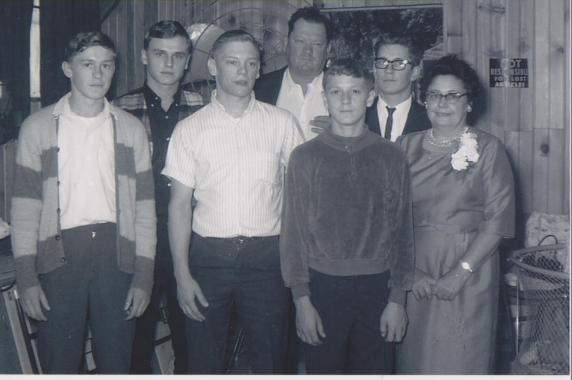
Grandma and Grandpa Blazek with the five boys that “had a lot of life” Jim, Tom, Don, Rick and Randy.
I’ve observed a work ethic in my dad that is unmatched. From delivering newspapers, farming and working at a gas station as a teenager; being a manager at Safeway grocery stores, working in dispatch, sales and management in the transportation industry; and, finally, in production and office management, my dad has ALWAYS worked hard, whether he liked his job or not. And for many years he supplemented his full-time job with hauling jobs—cleaning out attics and basements, taking trash to the landfill, and helping people move their belongings.
He had a good example of work ethic in his own grandfather, Frank Blazek, an immigrant from Czechoslovakia, who walked twenty-some miles to work on Sunday nights from Valparaiso to Gooch’s Mill in Lincoln, lived in a rented room all week, and, then walked home on Friday night to bring his paycheck home. And his own dad, Lod, worked wherever, whenever, doing whatever he could to make some money, even if the job took him a distance from home. Work wasn’t a choice. Work wasn’t about self-fulfillment or purpose or happiness. Work was a means to an end—it was food on the table.
So when my dad finally retired, he wasted no time getting to work on his dream (and if you know my dad, you understand there is no such thing as procrastinating or wasting time—he gets things done and works fast! And if there is a free moment, he washes his car.)
Each morning, rain or shine, for three years, he drove to downtown Lincoln, found a cheap place to park for four hours and walked to the Nebraska History Museum. While reading through archives, he took copious notes by hand. He read through every edition of the town newspaper, The Valparaiso Avalanche (1878-1887), followed by every edition of The Valparaiso Visitor (1887-1945), before diving into the Wahoo newspaper, the county seat, for anything about Valparaiso from 1945 on. Over 600 hours he spent at the Nebraska History and Saunders County Museums.
After gathering a morning’s worth of information, he went home to type up his findings, adding old family and town photos and local advertisements throughout the text. And when he had questions about what he read, he tracked down people he could talk to. He interviewed dozens of people who grew up in Valparaiso, often accompanied by his brother, Don. People loved to share their stories and some even offered up old photos and newspapers that weren’t available in the archives. My Uncle Don said, “I was amazed to hear people tell their stories when asked a question about the past. One question could ignite a person’s memory, some that probably had trouble remembering what they did last week, but, man, how they enjoyed reminiscing about their youth!”
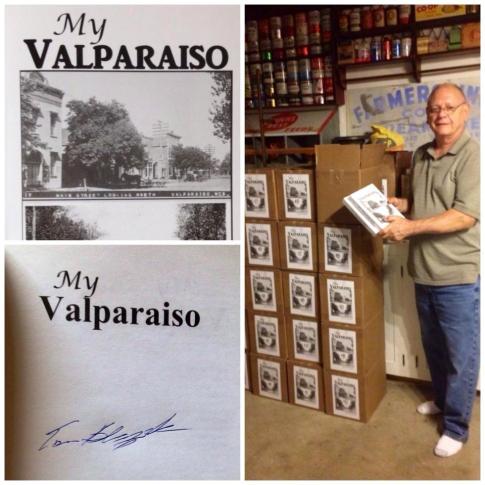
Tom Blazek with his first shipment of “My Valparaiso”.
Stories are as important for those who hear them as the one doing the telling. Being listened to validates our experiences; we matter when we are heard. When we were kids, my brother and I would beg for stories about our dad’s growing up shenanigans, a window into his life before we were in it. His stories helped us see what life was like for him and helped connect us to the generations before us. But these stories are lost if not written down. Writing this book was part fact-finding and part storytelling, both his own and others.
My dad had a goal to have his book completed, printed and ready for distribution at the 2014 Valparaiso Heritage Days, an event that hundreds would attend. My dad was a town hero that day. Tom Blazek, the most unlikely person in town to write a book, had accomplished just that.
The skeptics who didn’t think he could do it or who didn’t think people would spend $25 on a book, were the same folks who couldn’t put the book down. (Pictured below on top-right is Mrs. Ang, his teacher—she still looks skeptical, doesn’t she?)
People, scattered throughout the American Legion Hall, were leafing through “My Valparaiso”, reading, laughing, reminiscing, and sharing their own stories. It was a special day of recognition for my dad, a goal accomplished, and a dream come true. The response was overwhelming—people bought not just one copy, but two, three or more autographed copies for gifts.
Top left: me and my dad. Top right: Mrs. Ang and my dad.
Over the next weeks and months, the reaction to the book was overwhelming. People loved it, ordering more copies, calling friends in distant states and telling them about it. From all over Nebraska and the country, people called and wrote to order a book or share their stories. My dad heard from people in every region of the United States, including Arizona, California, Oregon, Utah, Nevada, Colorado, North Dakota, Iowa, Illinois, Indiana, Connecticut, Massachusetts Pennsylvania, Virginia, Georgia, Texas, and Oklahoma.
Who knew that the small town of Valparaiso had scattered its townspeople so far? Who knew “My Valparaiso”, and my dad’s work, could have such a far-reaching impact?
The conversations that followed unearthed new stories and information; a second book was born. Some, like sweet old Edna Johnson, who enjoyed the first book so much, pre-ordered “My Valparaiso II” before it was even finished, but, sadly, didn’t live long enough to see it published. Another lady, in her eighties, said she read things about her family that she had never heard before.
Published in the Wahoo Newspaper
“My Valparaiso” and “My Valparaiso II” are chock full of events and anecdotes that warm the heart and keep the history of the town alive—everything from tornados, fires and blizzards; to the first automobile, electric lights, and pool halls; to horse and buggy accidents, train wrecks, burglaries and even suspected murder; difficult times during the Great Depression, illnesses like hog cholera and scarlet fever; and festivities including Fourth of July celebrations, the traveling circus, auctions and church gatherings. You’ll also find a list of every person from Valparaiso who served in World War II, every graduate from Valparaiso High School and every business ever established, along with photos and advertisements that span the years.
A topic of great concern for many years was alcohol—would the town be dry or not? In 1908, apparently “German and Bohemian immigrants brought with them the thirst for beer.” But Valparaiso was a dry town, off and on, for several years. The town newspaper reported in 1909, “If Valparaiso goes dry again next spring, the Visitor will be for sale. We, the editor, must simply have an occasional nip in order to ward off despondency and keep up a business appearance.” In 1912, fifty drunks were caught celebrating the 4th of July, and concerned wife, Lillie McMaster, took out an ad in the paper saying, “I hereby forbid any person or persons to give or sell my husband any kind of liquor. This applies to the saloon keepers of Valparaiso and Touhy.”
One of my favorite stories that my dad told, included in the first book, is the time he blew up his dad’s car. Yup, he blew up his dad’s car. My dad and a few of his friends had a plan to drive into Lincoln and “cruise through Kings on O Street”, a popular past-time in 1962. The first attempt, after some likely reckless driving, resulted in the “knocked-out rear end of the car.” They needed different transportation and my dad had a bright idea: “My folks, along with another couple, were in Lincoln… my brothers and I were told not to touch the car. Knowing my Dad always checked the speedometer, I unhooked it.” But then they needed gas. (You can see where this is heading.) Siphoning gas from one vehicle to another was the second bright idea: “We had a pretty big stream of gas running between the two cars when Richard Draper lit his cigarette and accidently dropped it causing the gas to go up in flames…and burning the whole back end of the car. Needless to say, when my folks got home I was in big trouble.”
My dad is a lively storyteller (he has pretty good material) and is an attentive listener. What a gift Tom Blazek gave to those he listened to and to the folks who learned something new about their relatives because of his books. What a gift it was to tell the stories that otherwise would have been lost and for the childhood memories that were stirred. What a legacy that will live on because of my dad’s dream and hard work!
And yes, there will be another book. My dad says, “I may not live long enough to do Book 3 but people keep sending me stuff.” He’s also been asked to write a book about Touhy, the town a few miles north of Valparaiso. He thinks he’ll have that one published in about a year.
This, among many other things, is what I’ve learned from my dad: Where we come from is important, but even more so is what we leave behind. “If you want to change the world, pick up your pen and write.”-Martin Luther











 memories. My kindergarten-self chose nurse, teacher, model and mother as possible career and life choices, although the options were limited to traditional girl-jobs only. (I’ve wondered why I didn’t dare to select baseball player or astronaut. Was it because those jobs did not interest me or did I not consider the boy-jobs? Or why were airline hostess and secretary NOT of interest to me?) Female stereotypes aside, by fourth grade, I had wisely eliminated model and nurse (yuk and yuk!!), leaving teacher and mother.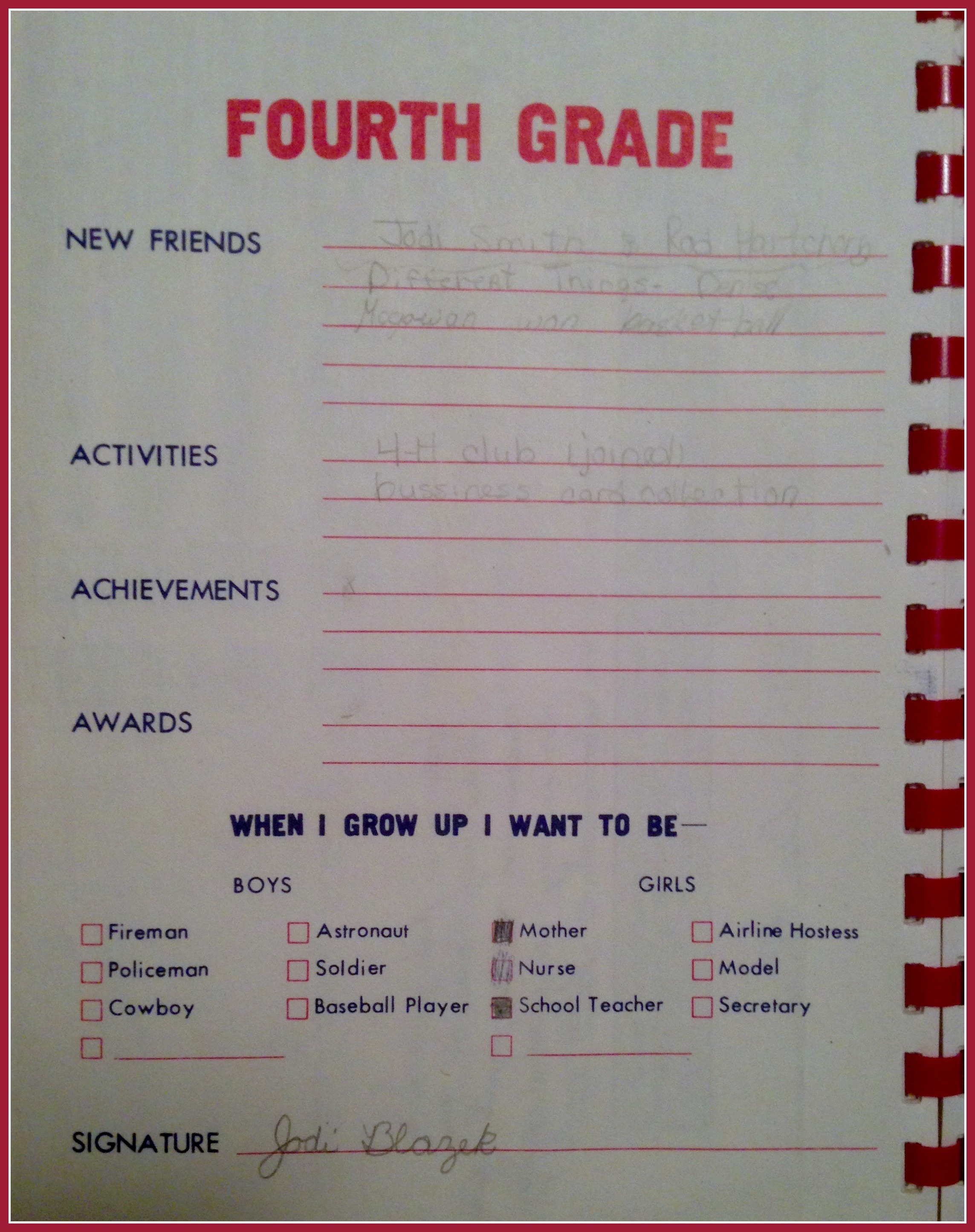

 Cushioned, either way. Loved, either way. Card created for Word of the Year, 2018.


 I had no idea what I was creating when I started, with no goal in mind. I was drawn to the older women sharing stories and enjoying each other’s company. They look experienced (not old, please), rested, peaceful, connected, comfortable and wise. I imagined what it was they might be discussing. Perhaps the storms of life, the many changes they had experienced, their efforts to rise or reach or resist, obstacles they had overcome, obstacles that made them feel all shot-up and yet, in the end, still standing, still sitting, still connecting, still enjoying.




 SoulFully You