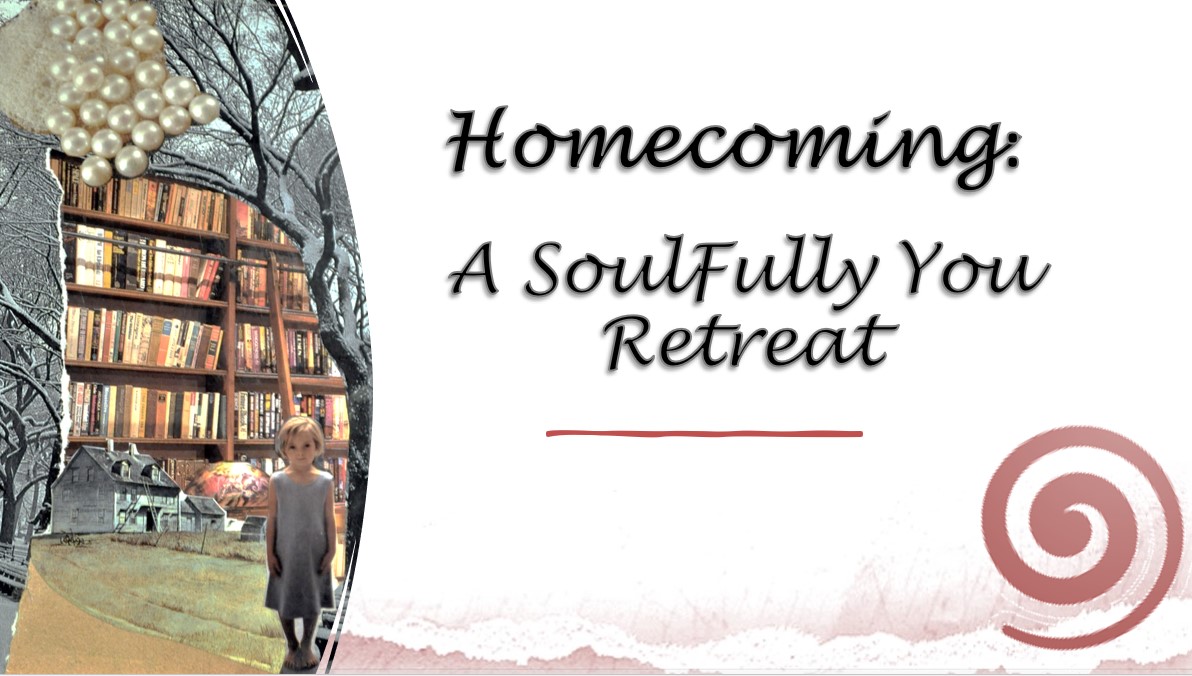
We long for the acceptance of home, a place of peace where we can be truly ourselves–seen and heard, loved and believed, held and yet free. Our longing is the existential homesickness that THIS isn’t all there is and that when we get a taste of unconditional acceptance and love, we want more. Our longings are good and holy—it is our Divine inheritance to experience all that it means to feel at home.
Inspired by the lyrics of Homesick, a song by friend Jana West, my annual Advent retreat was titled Homecoming: A SoulFully You Retreat. We explored how the Divine accompanies us, making a home within, and what it means to feel homesick or “at home” with ourselves and others. I offer some of our reflections so you, too, can take part:
“Love is home. Home is both an external dwelling and an internal abode. Home is the place where we belong, our place of acceptance and welcome. There, in this shame and judgment-free embryonic cocoon of love, we practice unconditional acceptance; we learn to relate to ourselves and the world around us.
And home is a soft place for the body to land, a safe place for the soul to fully disrobe. Home is the place where our failures don’t kill, our sins can’t crush, and even when we are at our worst, we’re safe. Home is a place where we are free to take our deepest, fullest, least encumbered breath.
At home, there’s no need to guess whether we’re in or out, welcomed or not. Home always prepares a place with us in mind.” (Center for Action and Contemplation, Home, 5/10/2024, Felicia Murrel)
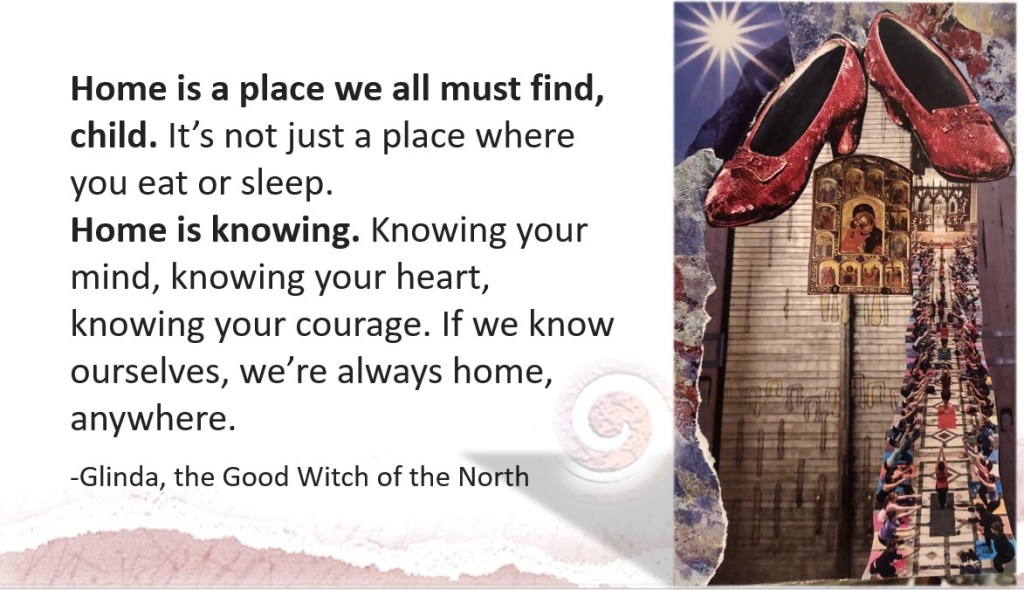
What words or phrases resonate with you? Indeed, our personal experiences of home can bring a spectrum of feelings, from warm and fuzzy to sadness or terror, when we consider what being “at home” means. The ideal is what we seek and long for, both within ourselves and with others.
In the 16th century, St. Teresa of Avila wrote about the importance of self-knowledge in The Interior Castle. “It is foolish to think that we will enter heaven without entering into ourselves, coming to know ourselves, reflecting on our misery and what we owe God, and begging Him often for mercy.” (IC 2:1.11) She used the castle with its seven dwelling places as an image for our soul—the center of the castle is God’s dwelling place and the gate of entry, prayer.
God resides within us. We are home to the Divine. To know God, we must know ourselves. We can practice a form of lectio divina, a life lectio, with a commitment to read, reflect, learn, listen, meditate, and pray to grow in inner awareness. Joan Chittiser, Benedictine sister writes, “Life is a series of experiences, all of them important, all of them here to be plumbed and squeezed and sucked dry, not for their own sake but so that we may come to know ourselves.” To live life to its fullest is our calling to become SoulFully You.
Knowing oneself brings inner confidence and a sense of being at home. This self-knowing can bring stability during personal challenges, family conflicts, workplace difficulties, and community or global tension. Some experiences and events can shake us to our foundation. We can feel uprooted, unhinged, lost, disappointed, anxious, and afraid. In Eternal Echoes, John O’Donohue writes “When you belong in yourself, you have poise and freedom. Even when the storm of suffering or confusion rages, it will not unhouse you.”
There lies within us a deep longing for self-discovery, acceptance, and freedom to be at home with who we are. “It is such a great moment of liberation when you learn to forgive yourself, let the burden go, and walk out into a new path of promise and possibility. Self-compassion is a wonderful gift …You should never reduce the mystery and expanse of your presence to a haunted fixation with something you did or did not do,” O’Donohue writes.
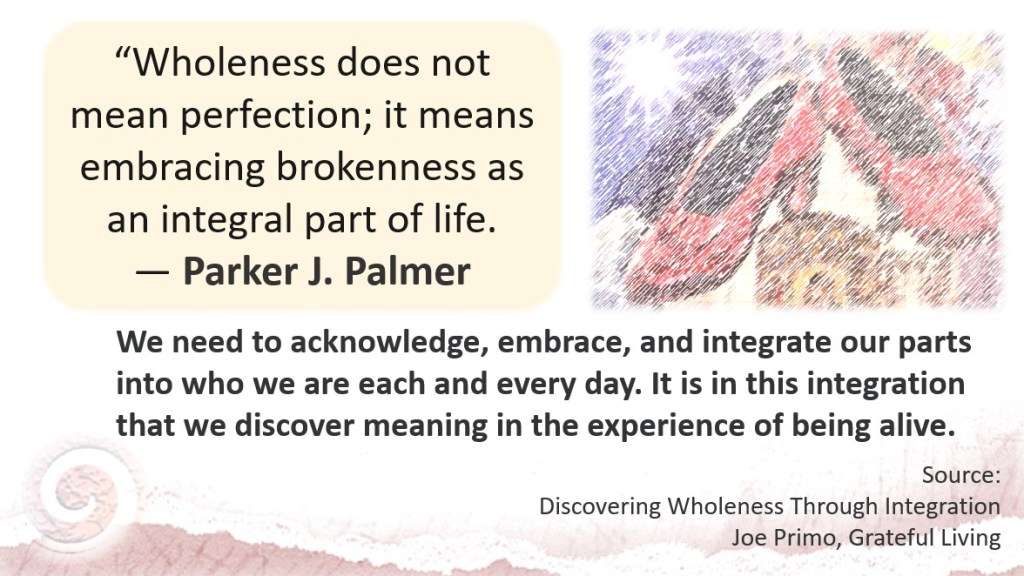
Becoming aware of our unloved, unforgiven, shadow parts of self is a step towards living SoulFully. Becoming whole is an integration of all our parts, especially those fragile and vulnerable places. Every aspect of our life has meaning, especially the challenging ones, the aspects of ourselves we hide out of fear that will be misunderstood or judged. This is SoulCollage. We gather the fragments, the bones, that create the embodiment of who we are by creating with images that resonate. One can begin this prayerful process by journaling with the following questions:
• What parts of yourself need to be heard, believed and loved?
• What aspect of yourself needs to be tenderly held?
• How are you preparing a home of unconditional acceptance for yourself?
• Is there a hidden, haunted or judged aspect of yourself that needs forgiveness?
• How do you welcome your body?
• How are you reclaiming the safety of home for yourself?
• What are you homesick for?
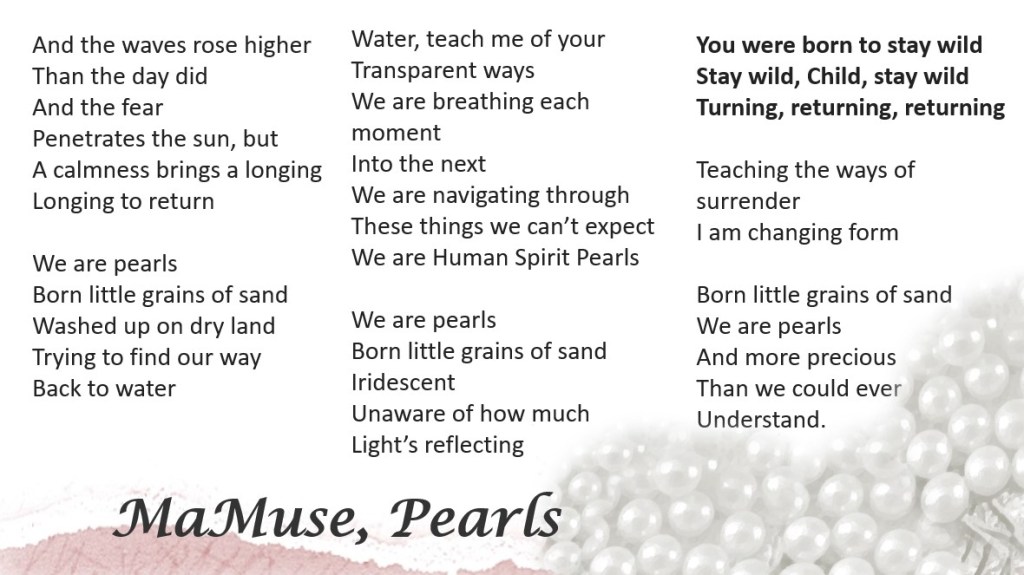
Finally, reflect on the prayer written by John O’Donohue and the song “Pearls” by MaMuse. Consider creating a collage that resonates with your longing for home.
We do well to follow the wisdom of St. Teresa in The Interior Castle to begin our journey home: “Not long ago a very learned man told me that souls who do not practice prayer are like people with paralyzed or crippled bodies; even though they have hands and feet they cannot give orders to these hands and feet…Insofar as I can understand, the door of entry to this castle is prayer and reflection.”
Pray. Share your reflections and/or images in comments.
More sessions to come…Homecoming: A SoulFully You Retreat
Past Advent retreat reflections:
Sprigs of Rosemary—A SoulFully You Online Advent Retreat (Session 1)


 SoulFully You
Leave a comment