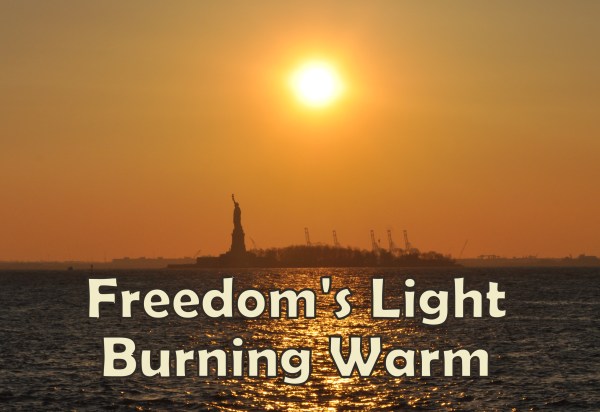
Freedom’s Light Burning Warm

This Independence Day, I listened to the Neil Diamond classic, “America,” a song that pays tribute to his grandmother who emigrated to the United States from Russia in the early 1900s,  reflecting on my own heritage, family, and country. We performed this song as the choir finale during my 9th-grade year at Pound Junior High, dancing in the aisles, shining little flashlights (circa 1980.) I felt so proud of the United States of America and the light of freedom it provided.

… Far
We’ve been traveling far
Without a home
But not without a star
Free
Only want to be free
We huddle close
Hang on to a dream

They’re coming to America today!

On a recent country drive, I passed through Prague, Nebraska, the small town near where my mother was born. I made a quick stop to purchase some freshly made kolaches, a traditional Czech fruit-filled pastry.


I also drove up and down the streets, noticing particularly the intersection of Elba and Moravia. Many of the town residents can trace their family roots back to Czechoslovakia and the Bohemia and Moravia regions. I imagined those first Czech immigrants who came to Nebraska—the familiar names and food of their homeland must have given them comfort, even as they sought a fresh beginning in this new country. The famous Nebraskan author Willa Cather wrote, “If security could ever have a smell, it would be the fragrance of a warm kolache.”

As a fourth generation immigrant, I am grateful their heritage was kept alive. My great-grandfather, Frank Blazek, arrived at Ellis Island in 1906 on the Barbarosa ship, not knowing a single soul or a speck of English. He came with only his work ethic and the desire for freedom and a prosperous life. He never saw the parents and siblings he left behind again. His family became his wife, Carrie Pekarek, and their six children—Lod (my grandfather), Rosalie, Frances, Bessie, and twins, Louis and Lillian. If he only knew that his great- and great-great-grandchildren would become park rangers, counselors, graphic artists, law enforcement officers, attorneys, biologists, bankers, teachers and more—I imagine he would have been surprised.

Bararosa

frank and carrie wedding.png
Frank Blazek, Carrie Pekarak and wedding party, 1909.

We are mothers and fathers, town and city dwellers, Republican and Democrat, Catholic and Protestant, single, married, divorced and re-married, high school graduates and college-educated. Most of us have stayed in Nebraska, some have moved out of state, a few have studied and traveled abroad. Each of us, offspring from a blacksmith shop owner named Frank, who until his dying day spoke mostly Czech, with his wife being his connection to the English-speaking world.


Photos: Frank Blazek’s Blacksmith shop (and advertisement) Weston, Nebraska 1908-1931.

When I traveled to the Czech Republic, I was shocked how the Czech traditions I had grown up with were not as apparent as I expected, sabotaged of their significance by World War II and the takeover by communists.

Czech Republic
Photos: It was surreal to see the Blazek name on a WWII war memorial in Telc, Czech Republic; likely not relation with spelling change from Frank Blazik to Blazek in America. Czech countryside resembles the area near Prague, Nebraska referred to as the Bohemian Alps.

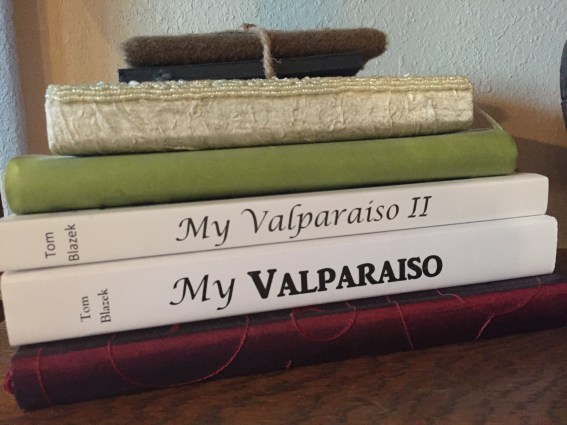
All the more important, I realized, it is to preserve our heritage or it will die—a little more with each person who passes from this world. My dad, Tom Blazek, played his part by writing the book, My Valparaiso I and II, capturing the history of his hometown, Valparaiso, Nebraska, and the many families who lived there.
IMG_5111
To purchase either book, see the Valparaiso, Nebraska Memories Facebook Page.

Connecting to our heritage does not mean that we are stuck in the past; rather, it allows us to embrace where we came from as well as being open to new beginnings. My cousin, Mike, demonstrates this poignantly. Recently, he purchased my grandma’s old house, the house she bought after my grandfather, Lod, passed away. This tiny house packed three generations (my grandma, her five sons, their wives and seven cousins) in to celebrate every holiday.


Photos: My grandma, Helen Blazek and the seven grandchildren that celebrated every Christmas in the tiny house. Circa 1974.

Mike tore the house down to its frame and rebuilt it piece by piece with his own hands—new walls, floors, ceilings, windows, everything. Mike and I reflected that it feels a little smaller to us now, but it never felt small or crowded to us then. We had family and traditions and that was plenty.


The before photos: Mike Blazek, my cousin, tears grandma’s house down to the frame to rebuild.

I love how Mike has honored our grandmother and the family she nurtured, while also creating a new beginning for himself (just as she had done.) Sometimes we must tear things down to the foundation to begin again. He preserved the old and created the new; we need both.


The After Photos: Mike’s house after working on it for over a year. 

“As we grow older we have more and more people to remember, people who have died before us. It is very important to remember those who have loved us and those we have loved. Remembering them means letting their spirits inspire us in our daily lives. They can become part of our spiritual communities and gently help us as we make decisions on our journeys… Remembering the dead is choosing their ongoing companionship.” Henri J. M. Nouwen, Bread for the Journey


Photos: Frank Blazek, my great-grandfather, was called “Doda” by all the grandchildren. 

In the spirit of remembering, my dad has gathered many memories, photos and artifacts into a family history. As I read the correspondence of postcards across the sea from father to son, sister to brother, I consider the immigration crisis my country, and many countries around the world, face today.


Postcard on left: My beloved brother! Another year has passed, your dear name day, your whole family wishes you what is best for every person, mostly health in your family circle. I have been able to live to this day. Wishes your sister, Marie Kytokova 10/10/62 Breelev  Other postcards sent from the home country through the years. 


My dad writes, “Now…everyone is protesting immigrants coming to America. We must remember we wouldn’t be here if our grandpa wasn’t one of those immigrants. (We) are lucky; we were born in America thanks to Frank Blazek. No one can tell us to go back where we came from like immigrants are told now.” 

My prayer for this Independence Day and for the tumultuous political environment we are in:

May we remember the courage it took for our ancestors and forefathers to seek freedom.

May we be compassionate to all those seeking freedom and safety today.

May we be the light—in our lives and in this country—a shining star for all.

May we recognize when we need a new beginning, a fresh start.

May we not cling to the past, but preserve it gently in our memory, keeping the richness of our heritage alive.

On the boats and on the planes
They’re coming to America
Never looking back again
They’re coming to America

Home, don’t it seem so far away
Oh, we’re traveling light today
In the eye of the storm

Home, to a new and a shiny place
Make our bed, and we’ll say our grace
Freedom’s light burning warm

Everywhere around the world
They’re coming to America
Every time that flag’s unfurled
They’re coming to America

Got a dream to take them there
They’re coming to America

#KnowYourNeighbor
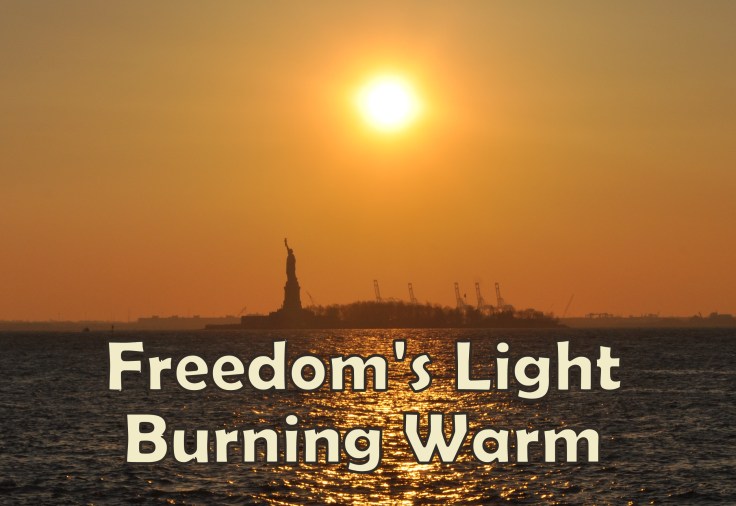
freedoms light


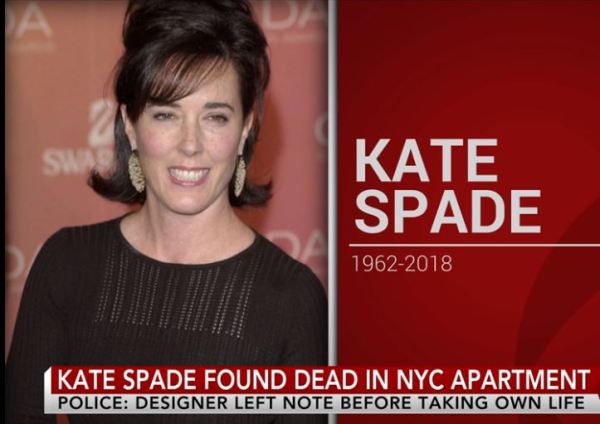
Suicide: That Voice In Your Head is a Liar

I don’t know Kate Spade. I don’t own any of her purses or other products. I’m not fashion-conscious by any stretch of the imagination—my daughter/personal shopper will vouch for that. But the news that Kate Spade—a beautiful, wealthy, creative woman—has ended her life has me in tears.

Capture

There are many unanswered questions for those left behind when someone takes their own life. I wonder about this woman I do not know. Were there demons in her head that told her she wasn’t enough, that there was no hope for healing her pain, that she was a burden to those who love her? I wonder about her husband, her child and her close friends. I wonder if she reached out for help. I wonder why her love for her daughter seems not to have been enough to override her feelings of despair. So many questions…

I immediately reached out to my own daughter—“If you ever ever ever feel that kind of depression or desperation, please please please reach out…It is never true—that evil voice in our head that says life isn’t worth it or that pain cannot be overcome. If there is a devil, that is it, that voice. It is a liar.” I thought of a former student who loved Kate Spade and her products—I sent her a message too. “This is shocking news but a testament that no one is immune.”

suicide

So often we think that the rich and famous, or educated, funny, spiritual (or any of the qualities we covet), do not struggle with depression and despair. But they are human, too. Even Kate Spade, who chose to end her life, must have felt she had no choice. There is a mystery to suicide. There is much we do not know or understand, but we should not blame those involved and/or think that it happens only to others.

We are all vulnerable. I lost a friend to suicide over a decade ago—and it still makes me sad and angry. I have also had bouts of depression, despair and the occasional voice of the devil that rears its ugly head in my thoughts. We are all vulnerable to becoming a victim of suicide—either one who is left behind, as one who struggles with despairing thoughts or the one who completes this final act.

In the weeks before my dear friend, Colleen, decided to take her own life, she suffered from immense physical, spiritual, psychological and emotional pain. No one can feel the pain of another or take it away but, still, I hope she received some comfort that she was met in her pain through conversations with and prayers from her loved ones.

I used to think this was enough—to be available and compassionate, to pray and forgive. But I think there is one more vital thing we can do for ourselves and others—tell them NOT to leave, beg them NOT to listen to the voice of the devil, the liar in their head.

Tell yourself that too. Get help. Stop a Suicide Today.

And as you encounter someone who seems at risk of suicide, consider the advice from St. Benedict, “Let all guests who arrive be received like Christ” and treat each person as if they were Christ himself, particularly yourself. You are the Christ-bearer and worthy of patient waiting for the dark night of the soul to pass. For an excellent article and insight from a Catholic perspective, read A Catholic Approach to the Suicide Epidemic.

A House Blessing and the Holy Trinity

A few months after we had moved into our new home, one of my favorite monks, Fr. Thomas Leitner joined us for a special dinner and house blessing. After the introductory prayers and Scripture readings, Fr. Thomas sprinkled Holy Water that had been blessed at the Easter Vigil in each of our rooms—the living room, bedrooms, kitchen, upstairs, downstairs and even next door at Al and Beth’s house, our townhouse roofmates—and a little extra splash for our loyal Dachsy-Poo, Bailey. Our daughter, who was finishing her last year in college, would spend a few months living in our new home, but mostly it would become our empty nest. This blessing for our home was also a blessing for the next chapter in our lives.

Building Hacienda Drive.jpg

Fr. Thomas also gave us a special gift, a replica of Andrei Rublev’s Holy Trinity Icon. An icon, an image or religious picture, communicates a deeper spiritual meaning often used in prayer and meditation for Christians throughout the world. It was a special image for him, used as the holy card for his ordination and First Mass in 1992.*  He enthusiastically shared with us why he also felt it represented how we would welcome those who entered as guests and the hospitality we would extend in our new home.

Fr. Thomas Holy Card

The three angels in the icon symbolize the three strangers that Abraham welcomes into his tent in Genesis.

Abraham’s Visitors

The LORD appeared to Abraham by the oak of Mamre, as he sat in the entrance of his tent…he saw three men standing near him. When he saw them, he ran from the entrance of the tent to greet them …He ran to the herd, picked out a tender, choice calf, and gave it to a servant, who quickly prepared it. Then he got some curds and milk, as well as the calf that had been prepared, and set these before them, waiting on them under the tree while they ate (Genesis 18:1–8).

The three angels wear different colored garments representing their distinct role in the relationship of the Trinity. Viewed left to right, the angels represent the Father, Son, and Holy Spirit. “The first angel wears a blue undergarment, symbolizing the divine nature of God and a purple outer garment, pointing to the Father’s kingship. The second angel is the most familiar as he is wearing the clothes typically worn by Jesus…The crimson color symbolizes Christ’s humanity, while the blue is indicative of his divinity. The oak tree behind the angel reminds us of the tree of life in the Garden of Eden as well as the cross upon which Christ saved the world from the sin of Adam. The third angel is wearing a blue garment (divinity), as well as a green vestment over the top. The color green points to the earth and the Holy Spirit’s mission of renewal…The two angels on the right of the icon have a slightly bowed head toward the other, illustrating the fact that the Son and Spirit come from the Father.” (Source: The Russian Icon that Reveals the Mystery of the Trinity, Alteteia, Philip Kosloski, May 21, 2016)

trinity2
A chalice sits at the center of the table representing both the literal meal the strangers were invited to and the table of the Eucharist we are invited to. It appears the Holy Spirit points towards an open space at the table, perhaps as an invitation to each of us, to all, to sit at the table—to be welcomed and received as Christ.

“At the front of the table, there appears to be a little rectangular hole. Most people pass right over it, but some art historians believe the remaining glue on the original icon indicates that there was perhaps once a mirror glued to the front of the table. It’s stunning when you think about it—there was room at this table for a fourth. The observer. You!” (Source: Take Your Place at the Table, Tuesday, September 13, 2016, Richard Rohr)

Fr. Thomas’ gift was a perfect expression of what Joe and I desire our home to be—hospitable and welcoming. Ironically, or providentially, a nail hung on an empty wall near where we opened our gift, so I placed the icon on it. It is the perfect place for it—in our living room where friends and family gather, and at the entry to our kitchen where most entertaining takes place.

IMG_1129

Holy Trinity Sunday is celebrated in many churches this weekend. It is an opportunity to remember, “…this Table is not reserved exclusively for the Three, nor is the divine circle a closed circle: we’re all invited in.” (Source: The Divine Dance: The Trinity and Your Transformation, Richard Rohr with Mike Morrell)

St. Benedict insisted that hospitality be one of the highest values for monasteries, writing “Let all guests who arrive be received as Christ.” (RB 53:1) Being hospitable is our opportunity to respond to God’s great generosity towards us.  If we are truly made in God’s image, lovingly invited to the Table and to dance with the Holy Trinity, then we are meant to extend that welcoming invitation to others.

hospitality

*A note from Fr. Thomas: This icon, which is used to depict the Holy Trinity, originally was meant to show the three Divine visitors to Abraham (Gen 18:1-15). The day of my First Mass in Noerdlingen was the 16th Sunday of Ordinary Time, Year C. On this day, Gen 18:1-10a is in the Lectionary in conjunction with Luke 10:38-42, Mary and Martha. The topic of hospitality, that we find as we combine these texts lent itself so well for the homily (preached by my former novice master, Fr. Meinrad) and also for my little speech at the reception. We practice hospitality and, perhaps without being aware of it, receive God in the guest.

Read more about Icon of the Holy Trinity by St Andrei Rublev

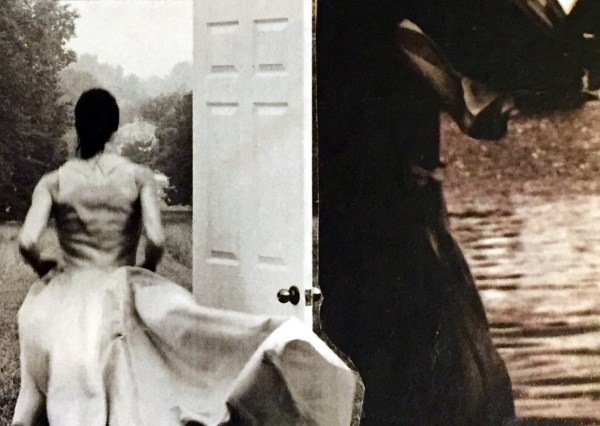
The Door is Open

“…the doors to the world of Wild Woman are few but precious. If you have a deep scar, that is a door, if you have an old, old story, that is a door. If you love the sky and the water so much you almost cannot bear it, that is a door. If you yearn for a deeper life a full life, a sane life, that is a door.” –Clarissa Pinkola Estes, Women Who Run With the Wolves

witnessA

I am one who is Witness to self.

I am one who stands tall

Upright, resilient, longsuffering

Despite winds of change.

I am one who, with the pace of a praying monk,

Glides gently through breeze and shadow, clouds and sea.

I stand centered and

Move with purpose

I am one who is Witness to self

It is time

The door is open.

SoulCollage® card name: Witness

Thoughts and Prayers, Guns and School

These past few days our social media feeds have been filled with messages of thoughts and prayers for the victims of yet another school shooting. And there are just as many posts that reject what may seem like Pollyanna, feel-good greetings:

thoughts and prayers 2thoughts and prayers

I understand both perspectives. I want to “LIKE” the thoughts and prayers posts and the posts that say prayers are not enough.

I send my thoughts and prayers to all the families who have lost loved ones because I believe in prayer. My heart goes out to the parents who have lost their beloved children, bursting with potential; for the teachers, inspired to share a passion for life-long learning; for the students who survived, the students who saw their friends die, and the students who will have nightmares for weeks, months and years to come from this trauma.

I believe in the power of prayer to change the person praying and to affect the situation being prayed for. When I pray, I am sending my heartfelt condolences and positive energy to a specific person and/or for a situation. And I know it works—I’ve felt it myself when others have prayed for me. I can only hope it makes a difference when I pray for others.

prayer

But I believe that giving only lip-service to prayer can be a cop-out, a way for some to avoid the responsibility of facing real issues. “Thoughts and prayers” can sound hollow without action, effort, or work towards change.

Prayer must be accompanied with authentic listening and selfless action. St. Benedict refers to this as “ora et labora” or prayer and work. This Benedictine motto has application beyond the monastery.

God empowers us and encourages us to put our prayers to work. Prayer alone is sentimental; work alone lacks heart and soul. It is not either prayer or work, but both prayer and work that can make an impact on those we love and for situations that need healing. We need both prayer and work.

This either/or thinking is what has brought our country to be divided on more issues than I can name here (besides, it just exhausts me.) There is not one single reason that America has found itself the leader in gun murders; there are many.

gun murders

A teacher colleague, Alan Holdorf, wrote, “We have a gun problem. Or we have a mental health problem. Or a discipline problem with our children. Can we have all of the problems? Then again, how silly would that be to have a multi-faceted problem that can’t be tackled by a single hot-button issue.”

Of course, America’s problems are multi-layered. There is something Americans are doing differently than other countries. There is something we are doing wrong. It is undeniable, but there isn’t one simple solution to our complex problems. The solution is not one thing or another, it is a both/and situation. There are layers of possibilities for addressing what ails our country, but for God’s sake let’s do something.

This crisis of gun violence in America is an opportunity to be open-minded listeners and to be leaders sans political agenda; to be compassionate and to detach from our own opinions long enough to realize that we all want the same thing—for our children to be safe in their learning environment.

It’s being humble enough as people, as a country, to say that we aren’t getting it right yet. We aren’t great and we never were. We have a long way to go to make all of America feel safe, let alone great.

But America and my classroom are two different things.

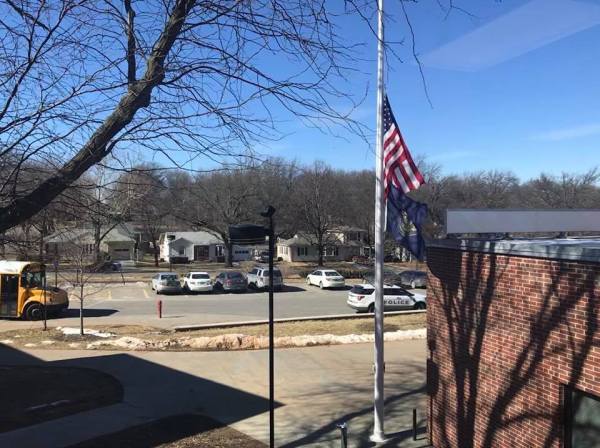
flag

My heart belongs to the classroom. I look out my window at the flag flying half-staff, and I am reminded how much I love my students and want them to succeed. I want them to become their best self, to reach their fullest potential. I grieve when I see that a student comes from an environment that doesn’t encourage or support that.

Students have so many more issues than they did when I started my career in education 21 years ago—there are m­ore broken homes, mental illness, learning disabilities, poverty, personal and family trauma. Teaching has become much more than delivering curriculum, it is about connecting to the heart, soul, and mind of my student.

But this does not require me to carry a gun—that’s too easy. An eye for an eye makes everyone blind. Instead, some policy decisions need to be made to prevent school violence. Some decisions need to be made to give teachers the tools they need to connect with and help our most vulnerable students. I will continue to PRAY and WORK towards this goal. 

“I’m a teacher and you want to arm me? Then arm me with a school psychologist who has time to do more than test and sit in meetings about testing. Arm me with enough counselors so we can build skills to prevent violence, and have meaningful discussions with students about their future. Arm me with social workers who can thoughtfully attend to students and their family’s needs. Arm me with enough school nurses so that they are accessible to every child. Arm me with more days on the calendar for teaching and learning and fewer days for standardized testing. Arm me with smaller class sizes that allow my colleagues and I to get to know our students and their families better. Arm me with community schools that are hubs of educational, cultural, health and civic partnerships, improving the entire community. Until you arm me to the hilt with what it takes to meet the needs of our school and students, I respectfully request you keep your guns out of my school.” Source: UTLA, video below.

Why I Teach

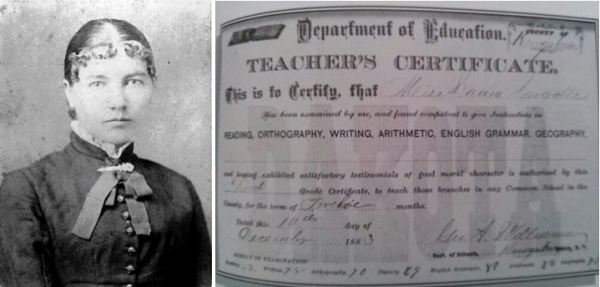
In honor of Laura Ingalls Wilder’s birthday February 7,  1867, I share a previous post, “Why I Teach.

Childhood Dreams

As early as kindergarten, I identified teacher as a potential
occupation
in my “School Years” book, a collection of elementary school Kindergarten teachermemories. My kindergarten-self chose nurse, teacher, model and mother as possible career and life choices, although the options were limited to traditional girl-jobs only. (I’ve wondered why I didn’t dare to select baseball player or astronaut. Was it because those jobs did not interest me or did I not consider the boy-jobs? Or why were airline hostess and secretary NOT of interest to me?) Female stereotypes aside, by fourth grade, I had wisely eliminated model and nurse (yuk and yuk!!), leaving teacher and mother.fourth grade
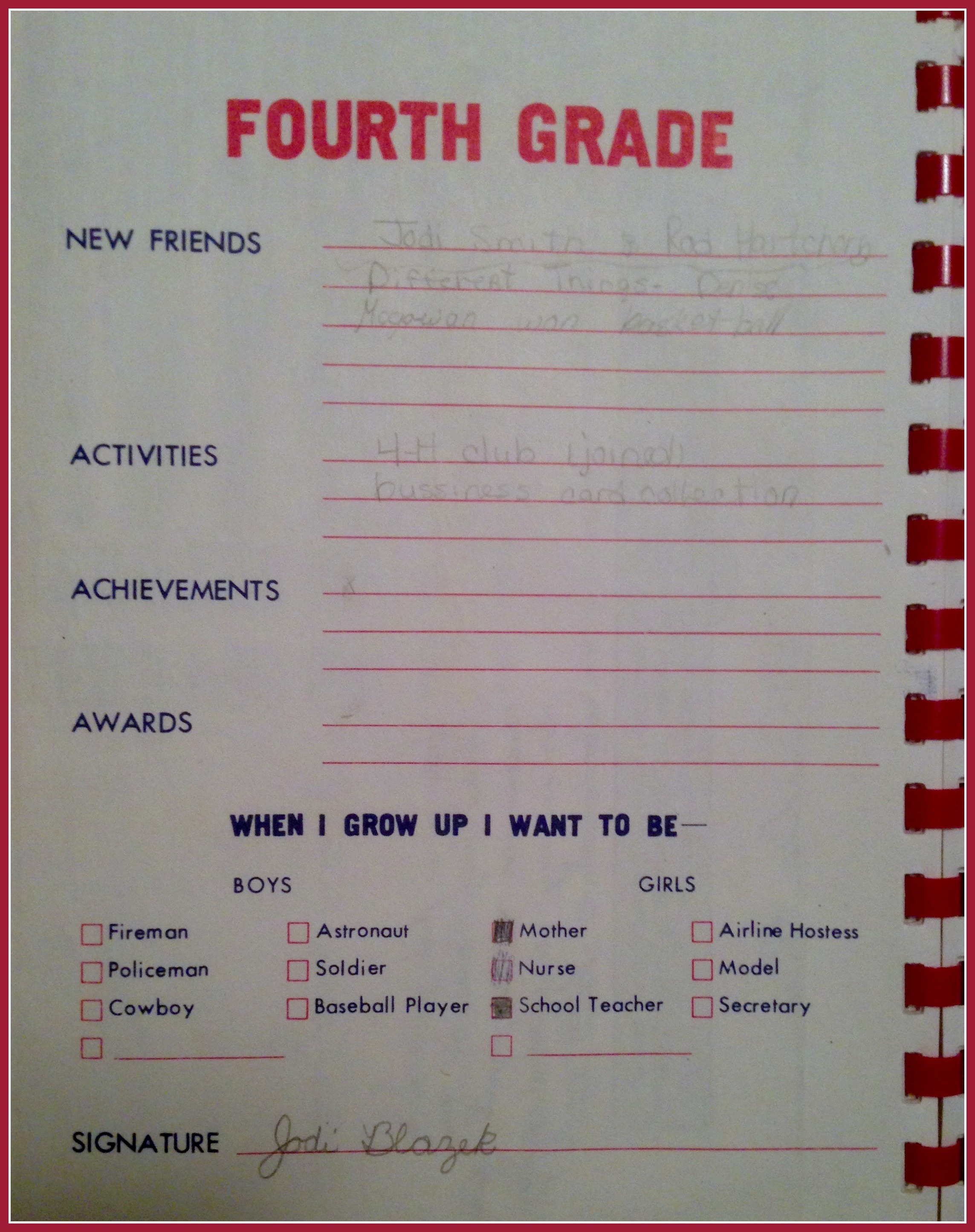
I was interested in learning and teaching as soon as I was old enough to work my way through phonics, spelling and math workbooks, just for fun. And then creating worksheets and math problems, grading spelling quizzes and making lesson plans became my childhood joys. My brother was my first student and I worked him pretty hard. I remember taking the graded assignments I’d given him to my fourth-grade teacher, proudly showing her what I was helping him accomplish outside of school hours. Rather than receiving the anticipated (and sought-after) praise, she promptly told me I should back off and not force him to be my student anymore or he might hate school—my first humbling opportunity at professional self-reflection.

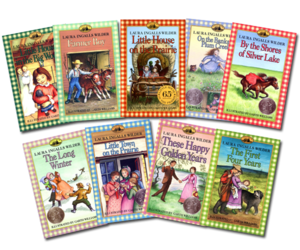
BooksLaura Ingalls Wilder was my childhood heroine. Pioneer girl turned teacher; wide-open prairie sky and her own classroom, from Little House on the Prairie to These Happy Golden Years —I wanted to BE Laura. I admired her sense of self-confidence and independence, how she encouraged students to overcome learning challenges, many not much younger than she. (I am such a huge fan of Laura Ingalls Wilder that when my daughter could barely read I bought the entire book series,  picture books and television movies for her and also road-tripped to Mansfield, Missouri to see the house where Laura penned all of the Little House books. Quite a thrill!)

All the evidence indicates that, if I wasn’t born with the desire to teach, the passion was stirring when I was very young.  Continue reading “Why I Teach”

Dear Super Blue Full Moon behind the clouds,

Dear Super Blue Full Moon behind the clouds, I know you are there even when I can’t see you, just like my loved ones who have passed on.

On this night of the Super Blue Full Moon (that I am sure is happening behind the clouds), I am reminded of a very special Full Moon experience eight years ago (thanks to Facebook memories…how else would I remember?)

Eight years ago tonight, a six-year vision came full circle when my friend, Joyce, and I facilitated a retreat for some special friends. It was a dream we had from the beginning. We wanted to create a safe place for women to share their spiritual journey—we called it our Circle.  We wanted to reach out to other women, to share our passion for seeking God and experiencing the Divine in our everyday life.

It didn’t happen quite the way we expected. Our friend, Colleen, was a part of our journey as well.  But Colleen had some demons that we were unaware of. When she took her life, we wondered—what kind of spiritual support group are we? How could this happen? How could our spiritual, compassionate, beautiful friend not want to continue this journey?

joyce-colleen-jodi-collage
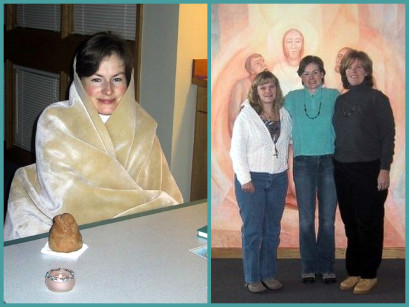
Joyce, Colleen and me at St. Benedict Center.

This, too, was part of our spiritual journey—the grief, questions, doubt, hurt, anger. But we shared it all together. When we came out the other end of healing (if that is really even possible), we knew we needed to have the retreat that we had all envisioned.

After several years, we did. I am grateful for the women who joined us on the journey— on that first retreat and also as part of our Circle that still meets monthly.

Joyces house 2018
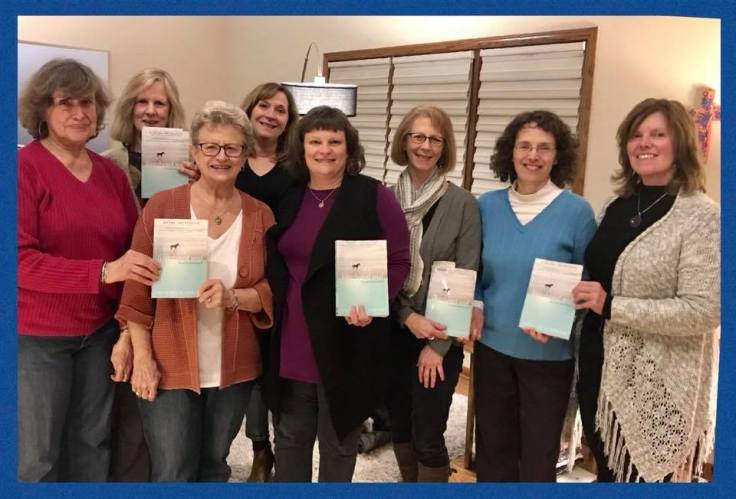
Our Circle–January 2018–we read The Untethered Soul by Michael A. Singer

I’ve continued to lead retreats using the name SoulFully You. It’s been such a gift to introduce others to the many ways to pray, especially using creativity and the power of images through the SoulCollage® process.

“When we embrace our creative spirits and learn to express ourselves creatively, we feel inspired and alive.  Creative and passionate expression is essential to the feminine soul.  Sometimes our creative fires get turned down, burn a little low, and even smolder, but the sparks can be rekindled and ignited.”— Moon Mother, Moon Daughter Janet Lucy and Terri Allison

19931_1301899957943_7011158_n

I thank God for the sparks in my life, my Circle, my friends. My eternal gratitude belongs to Colleen, whose idea it was in the first place to start a Circle. Her spirit lives on. We are a Circle that has no end.

“Friendship is the linking of spirits.  It is a spiritual act, not a social one.  It is the finding of the remainder of the self.  It is knowing a person before you even meet them.  I am not so sure, then, that we so much find a friend as it is that friendship, the deathless search of the soul for itself, finds us.”  The Friendship of Women, Joan Chittister

Dear Super Blue Full Moon behind the clouds, I know you are there even when I can’t see you, just like my loved ones who have passed on.

10522157_10204757058716680_377881611708579258_o
Full Moon, January 2010.

My word for the year is…

You know how spiritual gurus encourage you to pick a word of the year, something profound and inspirational to help you navigate a new year? Well, I found mine the other day. I had contemplated some lofty sounding words, but I don’t even remember them now because when this word fell on me, I knew it was the one.

My word for the year is going to be cushion.

cushioned either way.jpgCushioned, either way. Loved, either way.  Card created for Word of the Year, 2018.

When I have a lot of activity then I need to cushion it with some non-activity, some silence and solitude. When I have a lot of sitting, I need to cushion it with more standing and walking around (this I’ve learned from my back injury.) I love the “vorfreude”, the anticipation of travel, but my adventures need to be cushioned with the feeling of contentment when arriving home, sweet home. And the times when I think I can pour just a bit more information into my brain by reading one more article or one more chapter, I shall give myself a cushion, the needed space for new thoughts and ideas to bubble up.

Once I was taken with the idea of cushion as my one-word guide to freedom and happiness in 2018, I couldn’t stop thinking about the various applications. For instance, I should like to give myself a soft place to fall, a cushion on those days when I am too hard on myself. And when I’m too hard on others or expect too much, I can imagine a cushion between them and me. I can be a little softer and a little more forgiving, a little less rigid and a little more relaxed.

Really, it’s about balance, an invaluable tool of Benedictine spirituality that helps one stay in present moment experience, having enough silence and space to listen with the ear of the heart.

balance
One of the first cards I made, titled “Balance”

I remember how Fr. Mauritius demonstrated what balance looks like at a retreat he directed.  Standing in the center of the room, which represented having a perfect balance, he shared that it is impossible to always be in a perfectly balanced state of being. Rather, what we do is go a little too far to the left (say, with committing to too many social engagements) or a little too far to the right (perhaps, with too much isolation.) To demonstrate how we so often get out of balance, Fr. Mauritius physically ran to the left side of the room and bounced off the wall. And then to re-correct, an attempt at finding balance, he ran to the opposite side of the room and bounced off that wall.

balance2

Our life is a constant attempt to achieve some kind of balance, but perhaps our efforts can be made more gently. This bouncing off the wall is what I would like to avoid in 2018….with my cushion. Instead of overcommitting, I will take the time to ask myself—will this be too much? Am I overcommitting? Is this a physically, emotionally and spiritually healthy way for me to spend my time?

Additionally, I shall allow myself the cushion of time needed to make any decision. There is no need to rush, to overcommit, to bounce off that darn wall so hard. I shall gently bump into the ever-so-soft cushion I have gifted myself as a reminder to listen to the ear of the heart.

Speaking and silence.
Together and alone.
Activity and rest.
Prayer and work.

The connection between these two good options is the word “and”, not “or”. We need both. We need balance, yes, but we can give ourselves a cushion, the opportunity to rest knowing that perfection is not expected. We listen. We act. We pray. We readjust. “This is how a Benedictine’s day is. It is always changing, alternating—praying, working, resting. This is captured in the Benedictine motto, pray and work…The most important word is ‘and’.” -Fr. Mauritius Wilde

Perhaps, this cushion, this soft place to fall, is what love is.

I want to give that cushion, that love to myself. I pray my loved ones know that I can be their cushion, a soft place to fall when they need to know the love of another. “Love one another.”-John 13:34

And, finally, for myself and others–to remember that meeting God in prayer is the ultimate cushion“God is love.” 1 John 4:8

love merton

In place of confusing life patterns, the security of a healthy balance”, The Holy Rule of St. Benedict with Fr. Mauritius Wilde OSB

Listen to the Word of God”, The Holy Rule of St. Benedict with Fr. Mauritius Wilde OSB

Our Life is a Balance”, Being Benedictine,  January 2017 Oblate Reflections and Lectio Divina

My 2017 Word of the Year—Be Excessively Gentle: A New Year’s Un-Resolution, SoulFully You

Rome ~ Layers Like Lasagna

There are layers of history in Rome—“layers like lasagna”—one tour guide suggested. Literally, layers were built on top of layers, buildings that had been destroyed by war and natural disaster were covered with dirt and new buildings were erected over ruins. Symbolically, many Christian churches were built over ancient pagan sites.

The architecture, art, and religious history communicate something spiritual, a deeper story with layers of meaning, like lasagna. I’ll share some of my favorite places, and the journey, from my trip to Rome to attend the World Congress of Benedictine Oblates:

St. Peter’s Basilica and the Scavi tour

On my first morning in Rome, I had scheduled a visit to St. Peter’s Basilica and the Scavi tour of the necropolis beneath, including St. Peter’s tomb. My plan was to have a taxi drop me off where I needed to be to start the tour for a stress-free morning, no need for coat and umbrella, and no need to hurry. Where I thought I could find a taxi, there were none; where a distracted police officer pointed, there were none. A little nervous, I decided I should just start walking in the general direction of the Vatican or I may not get there in time. Surely, I would see the large dome and signs along the way. There were none.

This slideshow requires JavaScript.

I remember that the Vatican was just to the left of the Tiber River as it changes directions. With this vague idea, I set off on a lovely tree-lined path along the Tiber River. The views were beautiful—this will be just fine, I say to myself, I have plenty of time.Getting a little chilly, but I’ll be there soon. The online map said a 45-minute walk. Oops, a few sprinkles, a few more. Darn it, why didn’t I bring the umbrella I had packed?

 I reach the point where the Vatican should be but I see no less than six different options to take; I see no dome and no signs. In panic mode now, with it getting colder and sprinkling more, I ask a woman, “Where is the Vatican?”  Mind you, I had asked one young couple who responded, “In hurry, no time” and another woman who circled herself saying, “hmmm” whom I decided not to trust for accurate directions, but this woman—she is my angel. “No English. I take you,” she said. Oh, thank God.

DSC_0217a

She takes me a few blocks to the intersection where I finally see St. Peter’s Basilica (and its dome. Who knew the Vatican was surrounded by other tall buildings? Not what I had pictured.) I have finally arrived, yet I still need to walk several blocks in light rainfall, so I duck into a little storefront outside of St. Peter’s Square and buy an umbrella. Better safe, than sorry, I think.

Thirty seconds later, new umbrella overhead, I experienced the hardest rainfall I’ve ever walked in (outside of the time I got lost in Munich, Germany …. hmmm, seems to be an international pattern). I arrive at the gate of the Swiss Guard in plenty of time to stand in the cold and rain for at least 30 more minutes before the tour began. Still, I am grateful I walked. I learned, and saw, much more than I would have had I been delivered directly to St. Peter’s Square. There are layers of meaning when you surrender to the journey. 

DSC_0321a

The tour was quite amazing, but I was most struck by the case the guide built throughout the tour that the Basilica was indeed constructed over St. Peter’s tomb. The area beneath St. Peter’s Basilica was only discovered in the 1940s and during excavation, archaeologists found a 4th-century burial ground and a grave marked with ancient lettering translated, “Peter is here”.  I was so touched by the reverence our guide showed letting each individual participant have a few moments to privately view the site. It was a moment for the heart to remember only; no photos were permitted on the tour. Nearby the guide pointed out an elaborate grate in the ceiling—directly above, one could hear the prayers and responses of a Mass in progress in the Basilica. For centuries, what laid below was hidden. This faith, built on a grave, has layers of meaning, like lasagna.

DSC_0250a


I had plenty of time to explore the Basilica and its side chapels in quiet solitude when I went on my own, but on the World Congress of Benedictine Oblates group tour we learned some of the symbolism behind the artwork, altars, and relics from a guide. I learned the bronze statue of St. Peter holding the keys of heaven was a pilgrimage itself—for centuries pilgrims touched or kissed his right foot, literally wearing it thin, to receive a blessing from the Church’s first Pope, hoping the gates of heaven would be opened for them. This Catholic faith holds so many beautiful rituals with layers of meaning. Layers, like lasagna.

IMG_4493 (1)

Aventine Hill, One of the Seven Hills of Rome

Before going to the conference center, I stayed two nights at a monastery at the bottom of Aventine Hill, chosen to be near Sant’Anselmo all’Aventino, the monastery of Fr. Mauritius Wilde. Located in a surprisingly residential area near the Coliseum, I favored the solitude and quiet of the crooked, narrow street lined with gardens, parks and ancient churches to the bustle and crowds of St. Peter’s Basilica.

DSC_0413a

DSC_0405a

On the leisurely journey up the hill to visit Fr. Mauritius, I visited the Basilica of Santa Sabina, the oldest Roman Basilica built between 422 and 432, where Pope Francis celebrated Ash Wednesday.  Traditionally, the Pope begins the celebration at Sant’ Anselmo’s, walking on foot from one basilica to another, to celebrate the beginning of Lent. Further up the hill, I visited Santi Bonifacio and ­­­Santa Prisca, as well as a park that overlooked the center of Rome, and the famous Knights of Malta Keyhole that outlines a view of St. Peter’s perfectly.

DSC_0425a

It was a delight to see Fr. Mauritius, who moved to Rome after serving as Prior for six years at Schuyler’s Christ the King Priory. After a behind-the-scenes tour of the academic center, monastery, chapel and grounds, we enjoyed conversation on the patio. I had kept in touch with Fr. Mauritius since his move the year before, but this revealed another layer, like lasagna. There is a contentment knowing just where my friend’s home is, to know where he works and prays.

This slideshow requires JavaScript.

St. Benedict’s cell at San Benedetto and Montecassino Abbey

Both destinations were a highlight of sacred sites visited—first, the cell of St. Benedict while he studied in Rome (about the year 500) before founding his first monastery in Subiaco. The cell, or small room, has been preserved; a small chapel adjacent, San Benedetto in Piscinula, dates back to the 12th century. I loved, LOVED, loved this special place. I could have stayed there for hours. To know that St. Benedict listened “with the ear of his heart” in this very place, rejecting the political corruption of Rome and what was expected of him, to pursue the call he knew was from God—well, for a Benedictine Oblate, this is a moment. Had I not been in a group with a full sight-seeing schedule, I would have likely spent a half-day in contemplation at this chapel.

DSC_0399a

DSC_0409a

After a beautiful drive in the countryside east of Rome, we arrived at the Abbey of Montecassino where St. Benedict wrote his Rule. We were welcomed, after a foggy drive up the mountain, by clear skies and a heartfelt blessing at Mass—“This is your house as Benedictines,” the priest said, “St. Benedict welcomes you, hugs you, blesses you.” After Mass, we visited the original part of the Abbey, dating back to the 5th century, which had not been destroyed during World War II. This was another profound experience—to be in the place where the Rule of St. Benedict, a guide for monastics and oblates for over 1500 years, was penned. Later we met a gentleman who, as a little boy, had taken refuge with his family at the Abbey during the War, hoping to be safe with the monks high on the mountain. How devastating war is, how many layers there are—for this young boy and his family, the nearby town and, ultimately, the Abbey, bombed in the Battle of Monte Cassino. There are no winners in war.

This slideshow requires JavaScript.

Place is a powerful thing

It gives us perspective, a sense of where we’ve come from and how we’ve gotten here. The Christian story unfolded in this place of Rome. I am so grateful to have experienced this place of Peter and Paul, the places of St. Benedict and so many other holy places.

But I remember that home is holy too.

Home is where I work out the tension between stability and conversion. Home is where I listen to the ear of my heart. Home is the most important place; it is our present moment. Home is the people you surround yourself with, our friends and family. Our story unfolds at home. This is where we uncover our many layers, like lasagna.

lasagna
My first meal in Rome–lasagna!

Rome: Packing and unpacking can be a lot of work

It’s been a little over a month since I’v­e returned from Rome. I’ve reported on official business of the Oblate Congress in a four-part blog series on Being Benedictine.

DSC_0018a

It takes me awhile to unpack my feelings and the higher purpose or meaning within my experiences, but I’m getting there. For so many months I was filled with vorfreude, German for “anticipatory joy”, that bursting-with-excitement, overflowing-with-enthusiasm, oh-my-God-I-can’t-believe-this-is-happening-to-me-this-is-a-trip-of-a-lifetime feeling (just like the Germany pilgrimage.)

Here are a few things I’ve unpacked so far:

Worry is hardly ever worth it. 
Before I left, I confessed I felt guilty taking time away from school, that I was nervous about leaving my classroom for so many days. But it turned out there was absolutely nothing to worry about. Projects and assignments were graded, questions (if there were any) had been dealt with, students worked hard and truly didn’t miss a beat. I am so thankful for Karen Kay, my former department chair, friend and substitute teacher extraordinaire for giving me the gift of peace of mind and an easy transition back into the classroom (despite the jet lag)!

DSC_0019a

Things often turn out differently than expectedSometimes there are disappointments, sometimes pleasant surprises—the Rome experience was no exception. The night before I left, I pulled a muscle in my back while packing. It was one of those I-thought-that-only-happens-to-old-people moments when I simply bent down but did not come back up in a painless fashion. The pain ripped up my back, down my leg and I collapsed on the floor.

So many feelings—pain, fear, self-pity, anger, sadness, pain, worry, pain—coursed through me that evening, during a sleepless night and into the morning when I became worried that I wouldn’t be able to make the trip. And what if I did go and couldn’t walk when I arrived? But this was a trip of a lifetime, well-planned and prayed for, I was determined to go. I might as well try, I told myself, inching my way to my parent’s car to go to the airport.

DSC_0029a.JPG

It’s always about the people.
Before I even left, my heart was full of love and support from those who sent wishes of joyful and safe travels. Oblate friends, Betty, Teresa, and Diane, gave me a special blessing and Dee promised to pray a novena and have her husband light candles for me at daily Mass while I traveled. The prayers helped sustain me and give me confidence during some uncomfortable times.

Because I was so busy before I left, my husband got spending money and exchanged it for Euros at the bank, helping to take a few things off my list of things-to-do. When I became concerned that my accommodations would be too far away for sight-seeing, Fr. Mauritius helped secure a room for me at a monastery on Aventine Hill just a few minutes from his.  The night of my I-guess-this-means-I’m-old back injury, my friend, Beth, gave me a new box of pain relief patches for the journey and my physical therapist friend, Barb, gave me advice for surviving the long flight. On the way to the airport, my dad hurried into the pharmacy to get a prescription for me.

At the airport, the kind woman checking me in asked if I needed help lifting my luggage onto the scale (thank God, under 50 lbs) and the sweet young lady who sold me a snack noticed that I was a teacher (since I was proudly wearing my I ♥ Public Schools t-shirt) and said, “Keep makin’ the world go ‘round, darlin’!”

These simple, thoughtful words and gestures made such a difference to me. Love one another, it really works. “And be ye kind one to another…” -Ephesians 4:32

DSC_0055a.JPG

Amazingly and miraculously, the flight wasn’t terribly uncomfortable. Even without back pain, an international flight can be rough, but I was providentially seated next to the sweetest special needs woman from New York City named Dorothy, “like the Wizard of Oz”, she said. This introduction began a lovely 8-hour relationship that still brings a smile to my face.

Looking over the beverage menu before our flight even took off, Dorothy exclaimed, “They have Starbucks coffee; this airline is first class.” Later when Dorothy was asked if she wanted sugar with her coffee, she responded, “No, sugar. I’m already sweet enough.”

Traveling with a group and a few counselors helping out, Dorothy said she wants to “travel all around the world.” When I asked what was taking her to Rome, she said “I work at the Shop and Go and I paid for this trip. I work hard for my money.”

The day before, her counselor had taken Dorothy shopping. She got two new pairs of jeans and a shirt and she told me not to tell anyone, but she also snuck a pair of jeans in the cart that she really liked. She had cleaned her room that morning and had done laundry. She was thrilled to get free earbuds, to have video games to play and a variety of animated movies, including Cars 3, for entertainment.

Whenever anyone sneezed she said, “God Bless You”, when she needed something she said, “Jodi, Jodi, I need help”, and she mentioned a few times that she hoped she would have a coffee pot in her hotel room. Dorothy loves coffee.

A kind heart and simple mind, Dorothy truly lived in the moment. She kept busy with entertainment while I napped. I learned when we landed that she had slept not a wink on the eight-hour flight. She enjoyed it to the fullest. I thought of Dorothy a lot in Rome and since I’ve been home.

DSC_0152a

Miracles happen.
I survived the flight with very little pain. When I got off the airplane, I could walk. When I was dropped off at the wrong entrance to the monastery where I was staying for a few days, I was able to pull my luggage around the block and even help carry it up three flights of stairs to my humble accommodations.

After a Roman nap, I explored the area near me—including quaint, crooked streets, simple churches, ruins and the Colleseum. I walked over 6 kilometers and enjoyed my first Italian meal of lasagna and red wine. And I was in very little pain. I was grateful, so grateful, to be moving, to have arrived.

Rome. It begins.

I guess there will be a part 2 to this post.

Packing and unpacking can be a lot of work.

DSC_0183a.JPG

Create a free website or blog at WordPress.com.

Up ↑