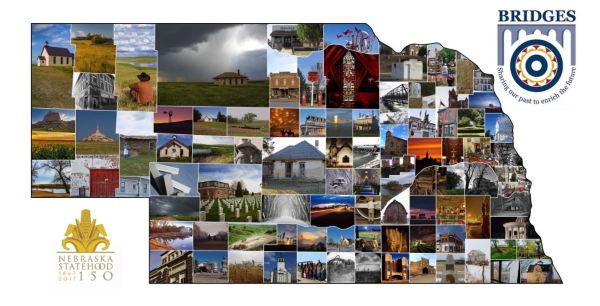
Bridges Photo Exhibit: 150 years, 93 counties, and my favorite place!

It’s finally here…Nebraska’s 150th birthday! And I can finally share the photograph of Christ the King Priory that is in  The “Bridges” Sesquicentennial Traveling Photo Exhibit.

capture

I submitted five photos of Christ the King Priory to a photography contest called Bridges, sponsored by Hildegard Center for the Arts, to highlight historic treasures in all 93 counties to celebrate the Sesquicentennial, or 150th birthday of Nebraska. Photographs were to focus on how the subject serves as a bridge to connect Nebraskan’s with their culture and heritage—a bridge from the past to the present.

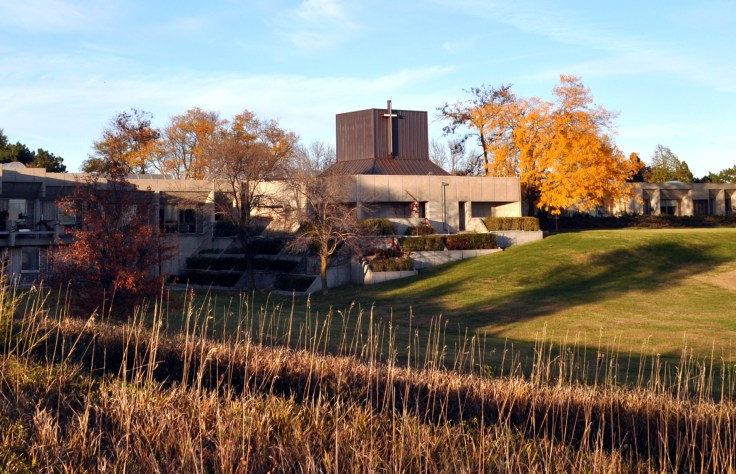
I entered the following photographs of Christ the King Priory, the Benedictine monastery where my favorite monks live, to represent Colfax County.

dsc_0113dsc_0553adsc_0559dsc_0565dsc_0660a

If you know me, you’ve likely heard me mention my favorite monks and St. Benedict Center a few hundred times or two. Over the past 15 years, I have been to dozens of programs and retreats, attended Mass and Liturgy of the Hours (daily prayers said five times a day) whenever I could, received countless sessions of spiritual direction, led my own SoulFully You retreats and have become a Benedictine Oblate. St. Benedict Center has helped me make my way back to the Catholic faith after a 20-year hiatus and has become my spiritual home. The monks and Oblates are family to me.

DSC_0389Photo: Final Oblation Mass, St. Benedict Center Chapel

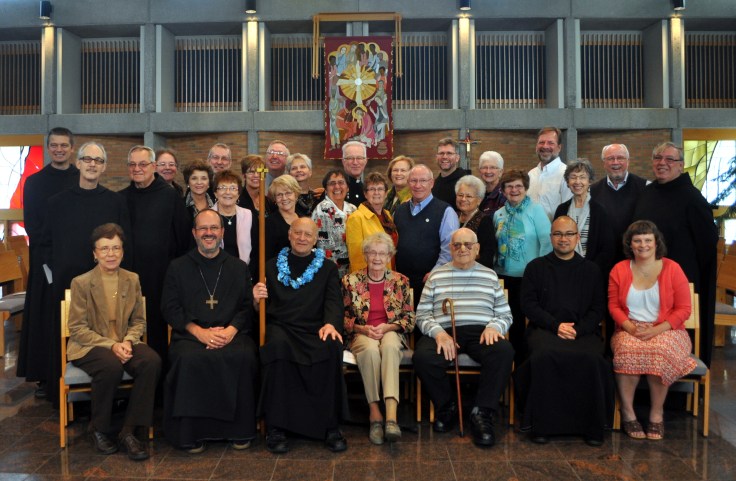
DSC_0168 - CopyPhoto: Jubilee Celebration, 50 years of Monastic Life for Fr. Volker Futter, pictured with oblates and monks of Christ the King Priory. 

So let me tell you the story of Christ the King Priory and how they are bridging the past with the present:

In the early 1930’s, two monks, Brothers Felix and Egbert, were sent to the United States from Münsterschwarzach Abbey in Germany. The Abbey, following the Rule of St. Benedict (dating back to the 6th century), felt threatened by the Nazi government. They were afraid their financial ability to support themselves and their missions around the world would be in jeopardy. They were, in fact, justified in their fear: the Abbey was seized during World War II and used as a hospital for German soldiers injured in the war.

Meanwhile, the two monks traveled throughout the United States, humbly accepting donations that allowed their mission work to continue. Their primary focus was on keeping their missions alive, particularly in Africa. If there was no income flow through donations, they could not continue their work, a vital component of the Benedictine motto, Ora et Labora (prayer and work).DSC_0589

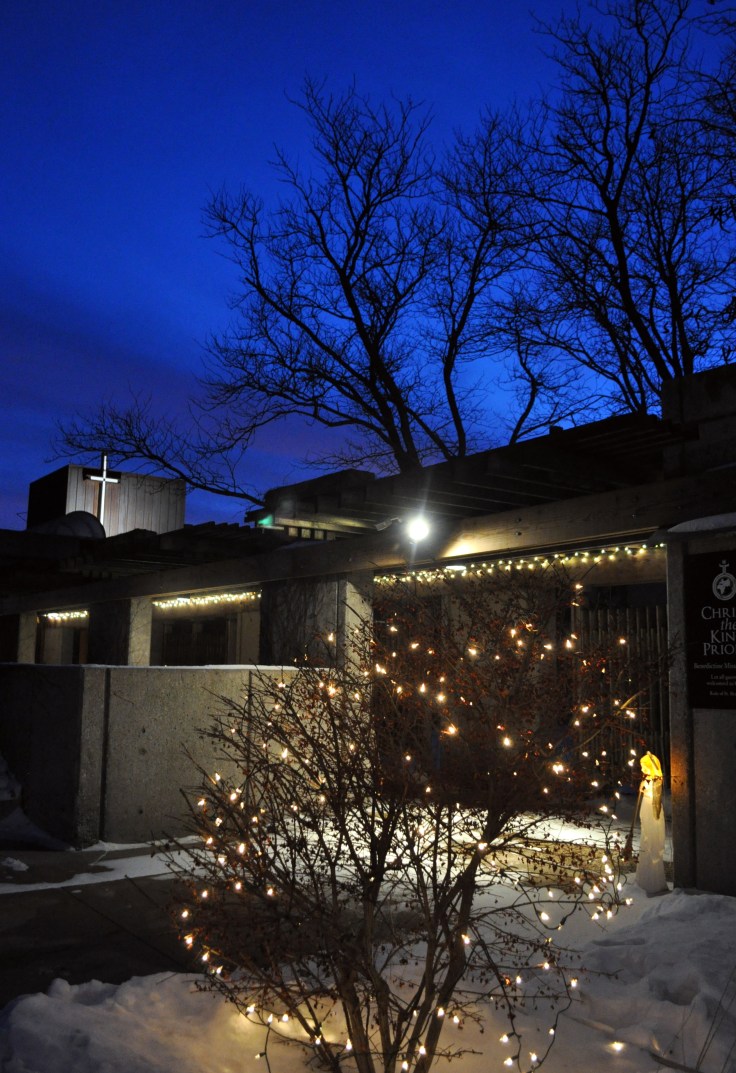
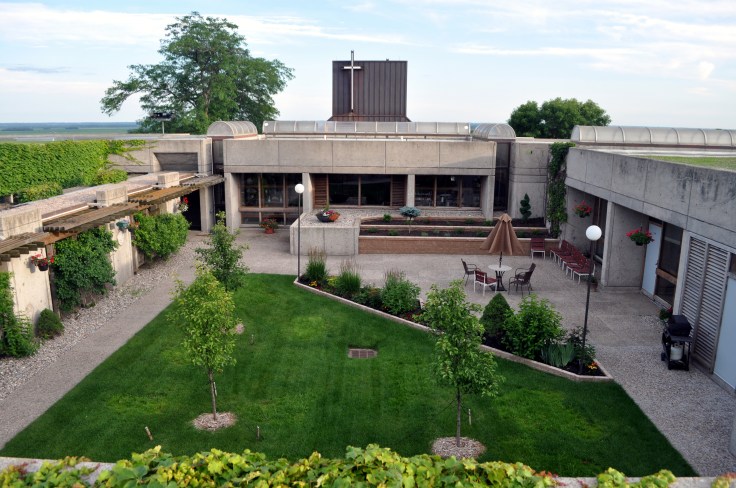
By 1935, the monks found their permanent home in Schuyler, Nebraska. The Benedictine Mission House, as they were named, had its first location in the former Notre Dame Sisters Convent, an old house in town. By 1979, several more monks joined the monastic community and a new home was built into “Mission Hill”, just north of Schuyler, and named Christ the King Priory. Their new home was uniquely designed burrowed into a hill, symbolically representing their vow of stability. The building, visible only on one side with a chapel steeple rising out of the center of the hill, appears like an earth lodge or a teepee as if to say, “We are here to stay. You have supported us and we shall now support you. We honor your native past and we want to be part of your present and future.”DSC_0395a

The monks, while continuing to fundraise for missions around the world, became servants of Schuyler by building a retreat and conference center in 1997. St. Benedict Center, built on 160 acres of farmland across from Christ the King Priory, provides an oasis of peace for those who search for personal and spiritual growth. They welcome individuals and groups of all Christian denominations as they seek God in a peaceful and quiet setting for prayer, rest, and renewal; a special place to escape the noisy world and to be alone with God.

Another vow the Benedictine monks take is obedience, to listen carefully to what God is saying and to be present to community needs. As the population of Schuyler changed through the years with an increase in Hispanic immigration, this careful listening led the monks to provide legal immigration services and support through El Puente, in a joint partnership with Catholic Charities of Omaha.

From 1930 to 2016, from Germany to Schuyler, from a small house in town to a monastery on the hill, the monks of Christ the King Priory bridge the past to the present. The German monks who came only to secure financial help for their worldwide missions are now serving immigrants and visitors from all around the world in the community of Schuyler, Nebraska through their missions of St. Benedict Center and El Puente.

DSC_1067Photo: Münsterschwarzach Abbey, Germany

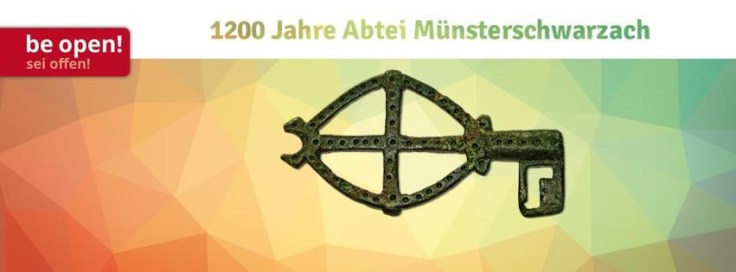
Münsterschwarzach Abbey, the mother house in Germany where Brother Felix and Egbert came from, eventually returned to its monastic roots after the war and celebrated 1200 years of prayer and work last summer.

IMG_0146

You can see all of the winners, a virtual photo exhibit, a digital catalog of all photos, lesson plans and more at the Hildegard Center for the Arts website. The traveling exhibit schedule is:

The Great Plains Art Museum in Lincoln: January 6 – March 25, 2017
The Seward Civic Center: June 1 – July 28, 2017
The North Platte Prairie Arts Center: August 1 – September 22, 2017
The Norfolk Art Center: September 7 – October 26, 2017
The Alliance Carnegie Arts Center: September 26 – November 10, 2017
The Durham Museum in Omaha: November 14, 2017 – January 7, 2018

For more information about St. Benedict Center and Christ the King Priory see their websites or follow them on Facebook, Twitter, or Pinterest.  

For more information about Benedictine spirituality, a new blog/website, BeingBenedictine.com.

For more information about Benedictine spirituality Fr. Mauritius Wilde, former Prior of Christ the King Priory, addresses many topics on Discerning Hearts podcasts and Wilde Monk blog posts

For more information about SoulFully You retreats and other blog posts.

Music as Prayer ♫ This Journey Is My Own

“Music and rhythm find their way into the secret places of the soul.” -Plato

Singing is soulful. It is prayerful and it is powerful. I love to sing (in the privacy of my own car). I love to listen to others sing, from the liturgical chant of Benedictine monks to contemporary Christian artists. Whether it’s the melody or insightful lyrics that I find a connection with, music can create a mood, help recognize or express a feeling, or bring me to a place of prayerful listening.

When monks are singing they believe they are singing with the angels, and we are just to join in. The beauty of singing familiar songs and hymns is allowing our mind and heart to beat as one. Songs that capture what we could have not so artfully written, become our prayer. To sing, or sing with another, is to elevate the soul, to connect with the Divine.

journey is my own

With music as inspiration, I created this SoulCollage® card to honor my own journey, some new paths I am taking. The words came later:

I am one who is on a journey. I walk this path alone, yet accompanied.  At times I walk a road that is flat, even, predictable; at other times with bumps and bends that I don’t expect. Sometimes it’s all uphill.  Smooth or stony, I walk with the prayer of birthing something new—a new awareness, aim or attitude,  the spark of a fresh idea, or the comfort of a new connection. There are times when the landscape is of no significance. I notice it and I keep walking, nose to the ground. More often, I am one who wanders the road, captivated by clouds and big sky, awake to the countless shades of ordinary green, gold and brown. I notice the details. That is my prayer. I want to see what’s new. I am surrounded by the music of my soul, a prayer, and voice that guides me. I am embraced by the sounds of heaven; I listen to the symphony created  just for me.  And I follow.  This journey is my own.

song-favorite1

“This Journey Is My Own”, a beautiful song by Sara Groves, captures the essence of my spiritual journey, one of my favorites: 

When I stand before the Lord, I’ll be standing alone
This journey is my own
Still I want man’s advice, and I need man’s approval
This journey is my own

Why would I want to live for man, and pay the highest price
What does it mean to gain a whole world, only to lose my life

So much of what I do is to make a good impression
This journey is my own
And so much of what I say is to make myself look better
But this journey is my own

And why would I want to live for man, and pay the highest price
And what does it mean to gain a whole world, only to lose my life

And I have never felt relief like I feel it right now
This journey is my own
Cuz trying to please the world, it was breaking me down
It was breaking me down

And now I live and I breathe for an audience of one
Now I live and I breathe for an audience of one
Cuz I know this journey is my own

And why would I want to live for man, and pay the highest price
And what does it mean to gain a whole world, only to lose my life
And you can live for someone else, and it will only bring you pain
I can’t even judge myself, only the Lord can say, ‘Well done.’

Oh, this journey is my own

download

This Journey is My Own, Sara Groves

CaptureSinging in God’s Presence #3: In place of the disability to express ourselves, to sing, The Holy Rule of St. Benedict: A Spiritual Path for Today’s World with Fr. Mauritius Wilde O.S.B., PhD.

“The aim and final reason of all music should be nothing else but the glory of God and the refreshment of the spirit.”-Johann Sebastian Bach


A Nebraska Birthday Wish

It’s Nebraska’s 150th birthday next year, but I get to blow out the candles and make the wish!! I know you aren’t supposed to share a birthday wish, but this is a secret I can’t keep. My wish: To share with everyone in Nebraska (and beyond) my favorite place in the whole world—a Benedictine monastery and retreat center in Schuyler, Nebraska.

DSC_0692Photo: St. Benedict Center

If you know me, you’ve likely heard me mention my favorite monks and St. Benedict Center a few hundred times or two. Over the past 14 years, I have been to dozens of programs and retreats, attended Mass and Liturgy of the Hours (daily prayers said five times a day) whenever I could, received countless sessions of spiritual direction, led my own SoulFully You retreats and have become a Benedictine Oblate. St. Benedict Center has helped me make my way back to the Catholic faith after a 20-year hiatus and has become my spiritual home. The monks and Oblates are family to me.

DSC_0389Photo: Final Oblation Mass, St. Benedict Center Chapel

If you know me, you also know that when I feel passionate about something I have a hard time keeping my mouth shut. If I read a good book, I want to tell everyone about it and start a book discussion. If I take a photograph that moves me, I feel compelled to share it with others. If I have a good story or example that will help my students, I will include it in my lesson plans within a few days. So this wish that I have—for everyone to know about my favorite monks and where they live—should come as no surprise. So when I learned about an opportunity to share my favorite place, I jumped on it.

DSC_0168 - CopyPhoto: Jubilee Celebration, 50 years of Monastic Life for Fr. Volker Futter, pictured with oblates and monks of Christ the King Priory. 

A photography contest, called Bridges, was sponsored by Hildegard Center for the Arts, in partnership with the Nebraska Tourism Commission and the Nebraska State Historical Society, to highlight historic or overlooked treasures in all 93 counties to celebrate the Sesquicentennial, or 150th birthday of Nebraska. Photographs of historical landmarks, buildings, cultural events or activities were to focus on how the subject serves as a bridge to connect Nebraskan’s with their culture and heritage—a bridge from the past to the present.

So guess what? My Nebraska birthday wish was granted!

I entered photographs of Christ the King Priory, the Benedictine monastery where my favorite monks live, to represent Colfax County. My photographs of the monastery were chosen to be part of a traveling exhibit and in Nebraska Tourism travel guides, posters, calendars and partnering websites. The Bridges Photo Call judges were world-renowned contributor to National Geographic Magazine and NEBRASKAland Magazine, Joel Sartore; University of Nebraska-Lincoln Professor Emeritus, George Tuck; and regular contributors to Nebraska Life Magazine, Bobbi and Steve Olson.

DSC_0397aPhoto: Christ the King Priory, the monastery where the monks reside.

So let me tell you the story of Christ the King Priory and how they are bridging the past with the present:

In the early 1930’s, two monks, Brothers Felix and Egbert, were sent to the United States from Münsterschwarzach Abbey in Germany. The Abbey, following the Rule of St. Benedict (dating back to the 6th century), felt threatened by the Nazi government. They were afraid their financial ability to support themselves and their missions around the world would be in jeopardy. They were, in fact, justified in their fear: the Abbey was seized during World War II and used as a hospital for German soldiers injured in the war.

Meanwhile, the two monks traveled throughout the United States, humbly accepting donations that allowed their mission work to continue. Their primary focus was on keeping their missions alive, particularly in Africa. If there was no income flow through donations, they could not continue their work, a vital component of the Benedictine motto, Ora et Labora (prayer and work).DSC_0589

By 1935, the monks found their permanent home in Schuyler, Nebraska. The Benedictine Mission House, as they were named, had its first location in the former Notre Dame Sisters Convent, an old house in town. By 1979, several more monks joined the monastic community and a new home was built into “Mission Hill”, just north of Schuyler, and named Christ the King Priory. Their new home was uniquely designed burrowed into a hill, symbolically representing their vow of stability. The building, visible only on one side with a chapel steeple rising out of the center of the hill, appears like an earth lodge or a teepee as if to say, “We are here to stay. You have supported us and we shall now support you. We honor your native past and we want to be part of your present and future.”DSC_0395a
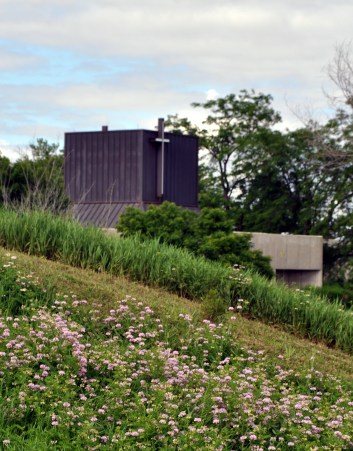
The monks, while continuing to fundraise for missions around the world, became servants of Schuyler by building a retreat and conference center in 1997. St. Benedict Center, built on 160 acres of farmland across from Christ the King Priory, provides an oasis of peace for those who search for personal and spiritual growth. They welcome individuals and groups of all Christian denominations as they seek God in a peaceful and quiet setting for prayer, rest, and renewal; a special place to escape the noisy world and to be alone with God.

Another vow the Benedictine monks take is obedience, to listen carefully to what God is saying and to be present to community needs. As the population of Schuyler changed through the years with an increase in Hispanic immigration, this careful listening led the monks to provide legal immigration services and support through El Puente, in a joint partnership with Catholic Charities of Omaha.

From 1930 to 2016, from Germany to Schuyler, from a small house in town to a monastery on the hill, the monks of Christ the King Priory bridge the past to the present. The German monks who came only to secure financial help for their worldwide missions are now serving immigrants and visitors from all around the world in the community of Schuyler, Nebraska through their missions of St. Benedict Center and El Puente.

DSC_1067Photo: Münsterschwarzach Abbey, Germany

Münsterschwarzach Abbey, the mother house in Germany where Brother Felix and Egbert came from, eventually returned to its monastic roots after the war and celebrates 1200 years of prayer and work this summer.

IMG_0146

So I told you my Nebraska birthday wish, but I have to keep the photos secret until they hit the road on the traveling exhibit. You can visit the traveling exhibit of photos that won in each county at: 

The Great Plains Art Museum in Lincoln: January 6 – March 25, 2017
The Seward Civic Center: June 1 – July 28, 2017
The North Platte Prairie Arts Center: August 1 – September 22, 2017
The Norfolk Art Center: September 7 – October 26, 2017
The Alliance Carnegie Arts Center: September 26 – November 10, 2017
The Durham Museum in Omaha: November 14, 2017 – January 7, 2018

For more information about St. Benedict Center and Christ the King Priory see their websites or follow them on Facebook, Twitter, or Pinterest.  

For more information about Benedictine spirituality Fr. Mauritius Wilde, Prior of Christ the King Priory, addresses many topics on Discerning Hearts podcasts and Wilde Monk blog posts.

For more information about SoulFully You retreats and other blog posts.  

I don’t know nothin’.

I don’t know nothin’.

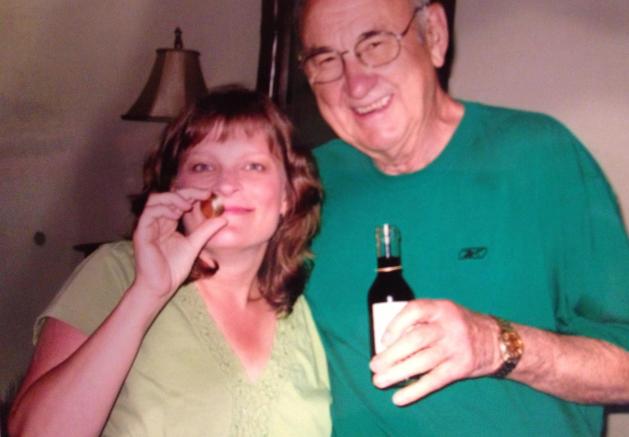
After trying to solve world problems, philosophizing and sharing his wisdom over a glass of wine at our kitchen table, my father-in-law, Marv, would exclaim, “What do I know? I don’t know nothin’.” He had thoughts and opinions (oh, yes, he did) and plenty of experience, but, self-admittedly, he knew he still didn’t know much.131207_10200564020853354_135052895_o

Marv said it often enough that it was the opening line in the eulogy my husband gave for his dad’s funeral. So much is held in those few words: I don’t know nothin’.

Perhaps it meant—I surrender. I am humbled. I don’t know it all. I don’t know hardly anything. I can’t see the big picture. I raise up my hands and proclaim, “I don’t know.” I thought I had answers. I thought I knew a lot, but now, I’m not so sure I know much at all.

I’m not sure if Marv meant all those things when he said “I don’t know nothin’,” but it does show that he left room for not knowing, for mystery. He knew he wasn’t in charge of all things true… and he admitted it many, many times.  

Feeling blinded by the dust and debris of life, his words speak to me when I feel my plans are not going according to the playbook I’ve written.  I’m not special; I know dust and debris fly for all. Life is humbling—this is what I think my father-in-law meant. And I am missing him right now because I know he would’ve comforted me and brought it all down to that one line-“I don’t know nothin’.”

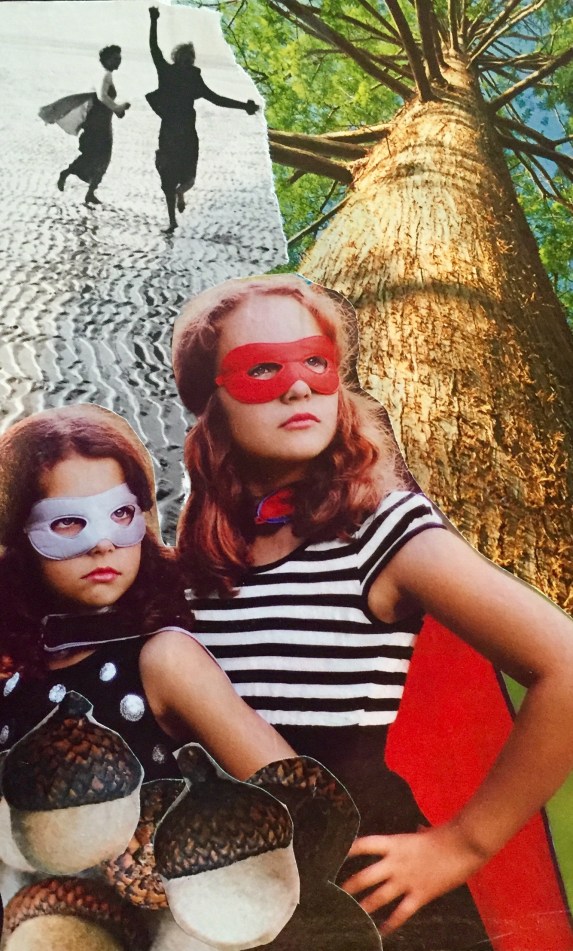
Marv, even though he’s been gone now for 3 years, still lives on in my heart and head. He is my inspiration for this SoulCollage card, “Surrender Supergirl”:supergirl

I am one who is young at heart, brave and courageous, but I am still growing. I have a ways to go before I am the Supergirl I wish that I was. I am one who isn’t quite as brave as I might look.

I wonder, how do I look? Do I care what I look like to others? Maybe, maybe not. Perhaps I should surrender this idea of Supergirl….or at least the idea that her strength and knowledge comes from me alone. 

Part of me is hidden from others and even myself. I’m still discovering who I am and where my strength comes from. I am at peace knowing that I don’t have everything all figured out right now, and maybe I never will. I will grow either way- whether I strive to or not.

The tree does not wish itself to grow. It just grows. In wind and rain, drought and snow, being cared for and being neglected, the tree grows. I am growing into the freedom of a cautious and courageous spirit. I am growing into knowing nothing, of letting go what I thought being strong and brave, courageous and peaceful looked like. 

It doesn’t look like anything. It is experienced. It is lived into. It is not an easy thing to grow, but I raise my arms in surrender, dancing on the beaches of freedom, the freedom from having to know everything. I surrender Supergirl.  

I don’t know nothin’.

Marv was almost 80 years old when he died and I am almost 50, but age doesn’t really matter when we are on a journey to knowing (and unknowing) ourselves. Marv was a humble man who gave of himself in so many ways. If this is what it means to know nothing, sign me up.

Whoever exalts himself shall be humbled, and whoever humbles himself shall be exalted. –Rule of St. Benedict, Chapter 7 MedalBlueGold180

Learn more about Benedictine spirituality and the Rule of St. Benedict.


Parker Palmer for President: The only political post I will ever make

How do we “ward off the buffoonery and blathering, the racism and sexism and homophobia, the distortions and demonizing, the rhetorical cruelty, the cover-ups, the abysmal ignorance and flat-out lies that suck the marrow from our souls as the 2016 presidential marathon gains momentum”? -Parker Palmer, Breathing New Life into “We The People”

Seriously, how do we??

I want to be an informed voter, to be aware of what’s happening in our country and to understand what the Presidential candidates hope to accomplish. But I just don’t know who or what to believe.

How can so many candidates believe they have the Absolute Truth and the One and Only Answer to all of our country’s problem? How can each of them be right and all the others be wrong? Why do hostility, distrust and self-righteousness have to be the status quo for election years?

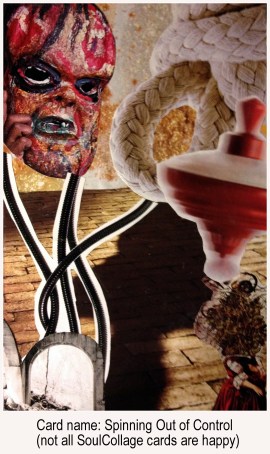
As the media and candidates spin their stories, I sit and spin (remember those?) and I’m sit and spindizzy. It makes one want to “hole up for the duration”; to turn off the news and hide every Facebook post that is political. There are some candidates or issues that bring a visceral response—my stomach hurts, my heart beats faster, I get tempted to respond or post my own political comments (likely, equally as uninformed as the post that pissed me off).

So why do I put myself through it? Why did I stay up late to see that, ultimately, a coin toss could determine who would be the Democratic “winner” of the Iowa caucuses? Why do I engage in political conversations that cause discomfort?

I have never been very political.  I would prefer to steer away from political conversations, even with issues I agree. Too often I find myself being the devil’s advocate because, well, that side needs defending too, right? Or I get so wound up (the sit and spin effect) because I know it’s not really a listening-kind-of conversation, but a trying-to-convince-me-of-something conversation. Political conversations seem so hopeless and people become so divided.spinning out of controlAB.jpg

I don’t like disagreement. I don’t like conflict. I want everyone to get along. But I know that I contribute to this conflict as much as I want to avoid it. I have my opinions that I think are right just as much as the person who believes strongly in something different. But having a daughter with a Political Science major and a husband who loves 24/7 news does not allow me to escape the political scene.

Escape is not really a good option anyway: I want to be politically and socially aware, to be able to have an intelligent conversation and an opinion about the issues and candidates that impact our future.

“Though much of our political discourse is toxic, “politics” itself is not a dirty word. It’s the ancient and honorable effort to come together across our differences and create a community in which the weak as well as the strong flourish, love and power collaborate, and justice and mercy have their day.” -Parker Palmer, Breathing New Life into “We The People”

Election years do feel toxic. It feels like there isn’t a lot of community that is created (except with people who are already like-minded). Community implies cooperation with those not necessarily like us, to “come together across our differences”.  But it feels like there isn’t a lot of listening. There is more holding to an opinion, standing our ground on what we think “makes America great” (even though we don’t know what that means and the candidates don’t tell us what they will do to get us there either).

revolution.

“We need a revolution of tenderness.” –Pope Francis

We need “a political revolution to transform our country economically, politically, socially and environmentally.” –Senator Bernie Sanders

The word that has resonated with me during these past few months is “revolution”.  It has come from the mouth of Pope Francis and from Senator Bernie Sanders. In both situations it is a call for desperate measures, a radical change in the way things are being done and the way we treat each other.

Pope emojiPlease do not mistake me for putting Pope Francis and Bernie Sanders, or any political candidate, in the same category.  Anyone who knows me knows Pope Francis wins any contest hands down (I have Pope emojis, case closed), but it’s the word “revolution” that has me thinking.  Perhaps we all have a sense when things aren’t working, when we need to try something different.
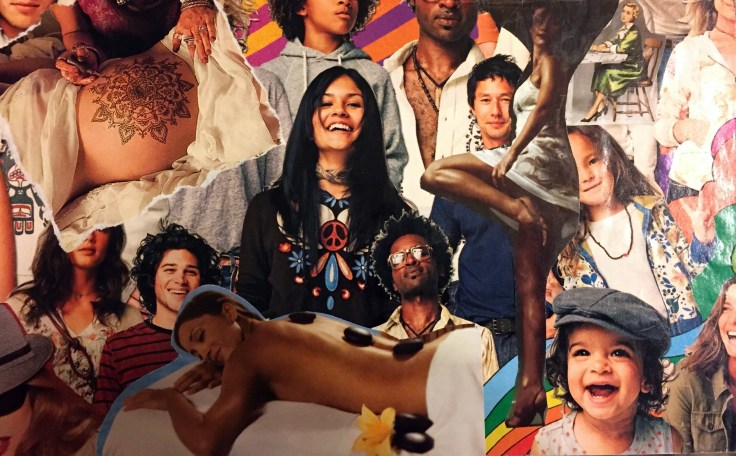
So what can we do to bring about a revolution of tenderness during this election year when it is all too easy to see what divides us, to dwell on the differences?

Parker Palmer, in his article Breathing New Life into “We the People”, makes some excellent suggestions for managing the political angst of an election year.

    1. Value our differences:Only through the creative conflict of ideas has the human race ever accomplished great things.
    2. Listen for the long haul: Holding your differences with others in a way that can sustain dialogue over time, giving everyone a chance to speak, listen, and learn.
    3. Listen for understanding: “The more you know about other people’s stories, the harder it is to dislike, distrust, or demonize them.”
    4. Honor diversity: “Not only visible diversity but the invisible forms of “otherness” (from political persuasions to sexual orientations) that exist among people who look alike.”
    5. Act with hospitality: We have the power to resist the culture of hostility that’s gutting American politics — to act daily in ways that foster a culture of hospitality…”

*all quotes above from Palmer article 

Palmer is a Quaker, but this all sounds very Benedictine.  St. Benedict, in his Rule, states “Let all guests who arrive be received like Christ.” (RSB: 53) Treating others as Christ takes intention.

So my goal for this election season is to be a little more Benedictine: to try a little tenderness; to be more hospitable, to be a little more tolerant of opinions different than my own.  To have more conversations where I simply listen; to be less judgmental; to try to understand why others believe or vote the way they do.  I am not an expert (on hardly anything, let alone politics) and I have a lot to learn. I have a lot to learn about treating others as Christ.

Having an attitude of tenderness and hospitality may be the only thing that can bring a revolution within, in this country or this world. As Palmer states, “Just as democracy can die a death of a thousand cuts, it can be given new life by a thousand acts of civility.”  I will do my part.

DiversityA

Card name: Diversity, It Takes All Kinds
Parker Palmer

More from Parker Palmer:  Chutzpah and Humility: Five Habits of the Heart for Democracy in America

….and a little more from Parker Palmer! I was tickled to hear from him on Facebook in response to this blog post.

Always We Begin Again

st ben begin again

“Always we begin again.” –St. Benedict

I just started my 39th semester of teaching.  I love the “beginning again” that comes with the teaching profession.  Two of my favorite things about teaching are discovering new ways to share the love of learning with students and the chance to start the next semester with a clean slate. Fresh ideas, new teaching strategies, another opportunity to grow and learn and improve—and hoping a little of that rubs off on my students. I want to make a difference and help students learn.

I think I’m still learning that I will never get it just right. I will never be perfect. But I love that I can be creative each day, trying new things, forgiving myself for what doesn’t work and starting over again the next day, week or semester.

 It’s a good reminder for everyday life as well.  So often in our relationships we carry the mistakes, hurts, expectations and fears into our next day; never really giving others, or ourselves, a chance to begin again.

What if we could truly give ourselves and others a clean slate? A fresh start?

What if we really could be merciful…compassionate, gentle, loving, understanding, kind, accepting, giving, patient, forgiving INSTEAD OF cold-hearted, impatient, irritated, withholding, reluctant, hard, thoughtless, self-centered, judgmental?

Being merciful means allowing ourselves and others the chance to begin again. How do we get there…to being more merciful?

mercy1

This year, Pope Francis  has declared a Jubilee or Holy Year of Mercy. He believes we need a  “revolution of tenderness”—between nations and in our personal relationships.

revolution4“How much I desire that the year to come will be steeped in mercy, so that we can go out to every man and woman, bringing the goodness and tenderness of God,” he wrote. He believes it is time for the Church to show her motherly face to a humanity that is wounded.”

What powerful images Pope Francis brings to this word we all too often use, but do not understand or practice: MERCY. A chance to begin again.

For Christmas, I wanted to create a SoulCollage® card for my monk friends at Christ the King Priory that represented the season. I gathered images that seemed Christmas-y and tried to bring them into unity on a card.  But it just wasn’t working; images that called to me instead kept saying MERCY. So I went with it. I let the word and idea of mercy flow over me and into the creation. The process of creating was prayerful and inspired and joyful. The card and words that follow are the result:

mercy

A gesture, an embrace, a tender gaze
Lays bare every vein, wrinkle, pore and blade.
In the Light, transparent and humbled,
We are seen, truly seen.

Despite our failures and flights,
Doors of mercy open to
Eternal love made visible. 

Pope Francis believes, “The most important thing in the life of every man and every woman is not that they should never fall along the way, the important thing is always to get back up.”

May we take this word and image, MERCY, into our year and our lives. The doors are always open for us to begin again. We are received just as the Prodigal Son was received, with open and forgiving arms. The image of the Prodigal Son, created by Rembrandt, communicates both the motherly and fatherly qualities of a God who welcomes us all home. It conveys all of the qualities of mercy that we hope to receive and can strive to give: compassion, tenderness, love and acceptance.

In our thoughts, words and actions, towards ourselves and others, we have a new day to try again to give and receive the mercy that God has given us.

Each new day is a new day.  Always we begin again.

Every Little Thing!

Little things matter. A bunch of little things can make a difference, especially if it’s all the candy we eat in the weeks leading up to and following Halloween, which bumps into the weeks leading up to and following Thanksgiving…and then there’s all the Christmas parties… you get the idea. All the fun-sized, little snacks and treats can just plain add up on the scale.  Little things matter.

But little things can add up unexpectedly in big and good ways, too. The little things we do to take care of our physical, emotional and spiritual health can make a difference. The peaceful inhale and exhale of a contemplative prayer or meditation practice can sustain us when times are stressful. The little things we do for others can give comfort or show appreciation.

There are lots of little ways to make a big difference in the lives of people that we work, play and live with.

My former neighbor and friend, Deidra Riggs, wrote a book called Every Little Thing: Making a World of Difference Right Where You Are. Deidra found herself living in Nebraska, having moved here for her husband’s job, but not liking it one bit. Right where she was, was not where she wanted to be.

I started planning my escape. I wanted out. Not through. As far as I could tell, Nebraska was the very worst place to live in all the world”, she writes. Continue reading “Every Little Thing!”

We are moons, not suns.

 We are moons, not suns, except in our ability to pass on the light. ~Richard Rohr

DSC_0748a

Just as the moon receives it’s light from the Sun, so we gather our light from a greater Source. Drawing from Divine Light through prayer, gratitude and creativity, we can grow into the fullness of life that God desires for us. By spending time in silence and creative prayerwe can hear more clearly what God desires for us.

DSC_0754a

It takes time and intention and an open heart, a willingness to set aside our own agendas for awhile to let the light of God flow into and through us. We live from our truest selves by surrendering to the process of becoming. Continue reading “We are moons, not suns.”

Living in the Fullness of God

Seeking solitude and quiet, I was drawn to an advertisement in the Lincoln journey to fullnessJournal-Star—“This retreat in the style of Zen involves breath practice.  In contemplative prayer, we divest our minds of all thoughts and images in order to receive the pure and simple light of God directly into the summit of our souls.”  Breathing as prayer.  Experiencing God directly.  These words spoke to me; they held promise.
That was in Continue reading “Living in the Fullness of God”

Decluttering: Taking Off The Top Layer

We’ve taken off the top layer of knick-knacks, wall hangings and books—twenty years of pictures of Jessica growing up, snapshots of vacations, dozens of refrigerator magnets holding senior pictures, expired coupons, newspaper clippings and birth announcements—and loaded up two trailers-worth of boxes and furniture that we can live without for a while (and perhaps longer).  The stuff that we can live without has gone to a better home. Continue reading “Decluttering: Taking Off The Top Layer”

Blog at WordPress.com.

Up ↑